Skip to content






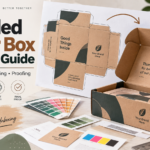


Premium packaging buyers are rarely dealing with a simple box-selection problem. The real challenge is balancing structural performance, presentation, product fit, freight efficiency, production feasibility, and brand positioning without allowing one requirement to compromise another.
A rigid box can look excellent in a digital mockup and still create problems during production. Lid tolerances can be too tight, wrapping paper can crease at corners, inserts can consume valuable interior space, or a finished package can become unnecessarily expensive to freight because the dimensions were selected without considering carton packing efficiency.
For ecommerce brands, Shopify stores, Amazon FBA sellers, subscription businesses, and premium retailers, luxury rigid box packaging needs to work at several levels simultaneously. It must present the product properly, protect it through handling and transportation, and remain practical to manufacture at the required volume.
The right specification is therefore not simply the thickest board or the most decorative finish. It is the combination of material, structure, dimensions, finishing, and production requirements that makes sense for the product and its supply chain.
Quick Answer: How Do You Choose Luxury Rigid Box Packaging?
Start with the product rather than the appearance of the box.
Determine the required internal dimensions, product weight, protection level, opening style, branding requirements, expected order volume, shipping method, and target landed cost. Then select the appropriate board construction, wrapping material, insert system, structural style, and finishing process.
For high-volume production, also review MOQ, tooling requirements, production lead times, carton packing efficiency, freight dimensions, and quality-control tolerances before approving the final specification.
A premium box that photographs well but performs poorly during production or freight is not a successful packaging solution.
In This Article
This article covers the practical factors procurement teams and growing brands should evaluate before specifying rigid packaging:
- Rigid box materials and structural construction
- Board caliper, wrapping paper, and material selection
- Common rigid box structures and their production considerations
- Printing and finishing options
- Product protection and interior insert requirements
- US wholesale sourcing, freight, MOQ, and lead-time considerations
- The Boxology’s Expert Insight on structural and freight efficiency
- A side-by-side comparison of rigid packaging structures
- A practical specification checklist for packaging buyers
Luxury Rigid Box Materials: Understanding the Structural Reality
The finished appearance of a rigid package starts with the board underneath the printed wrap. In manufacturing, that substrate is doing most of the structural work even though the customer may never see it.
Rigid boxes are commonly constructed using paperboard or chipboard that provides the stiffness required for the lid, base, walls, and other structural components. The appropriate board thickness depends on box dimensions, product weight, structural configuration, and the level of rigidity required.
Board Caliper Matters
Caliper refers to the thickness of the board. Increasing caliper generally increases stiffness, but simply specifying a thicker board is not always the correct engineering solution.
A larger box with broad unsupported panels may require greater structural stiffness than a small presentation box. Conversely, using unnecessarily heavy board on a compact package can increase material consumption, finished weight, and freight costs without delivering a meaningful improvement in customer experience.
During specification, evaluate:
- Finished box dimensions
- Panel size and unsupported spans
- Product weight
- Stacking requirements
- Expected handling conditions
- Interior support requirements
- Finished package weight
The goal is adequate structural integrity not maximum material thickness. For brands that already know they need a premium presentation format, selecting the right luxury rigid boxes is ultimately a matter of matching the construction to the product, order volume, and intended customer experience.
Wrapping Paper and GSM Selection
The visible exterior of a rigid box is commonly created by wrapping the structural board with printed or decorative paper.
Paper GSM (grams per square metre) provides one indication of paper weight, but GSM should not be treated as a standalone measure of packaging quality. Surface finish, fiber characteristics, printability, folding behavior, and compatibility with automated or semi-automated wrapping processes also matter.
A visually attractive paper can create manufacturing problems if it does not fold cleanly around corners or maintain consistent adhesion during wrapping.
In my experience managing high-volume custom production runs, corner and edge quality is one of the areas where packaging buyers notice the difference between a properly engineered specification and a design developed purely from a screen mockup.
The wrapping material should therefore be assessed for:
- Print quality
- Folding performance
- Adhesion compatibility
- Surface durability
- Texture and tactile appearance
- Color consistency between production batches
When responsible sourcing is part of the packaging specification, buyers should also verify the certification claims associated with the paper or board rather than assuming that every paper-based material has the same sourcing credentials.(FSC)
Structural Design Is More Than Box Shape
Two boxes can have similar external dimensions while performing very differently during manufacturing and handling. For a deeper look at structural planning and design considerations, buyers can also review our rigid box design guide before finalizing a production specification.
A two-piece lid-and-base construction, for example, has different production requirements from a drawer-style package. Hinged book-style structures introduce additional considerations around hinge construction and opening clearance. Magnetic closures require accurate positioning so the package closes consistently without creating unnecessary stress on the wrapped board.
The internal dimensions also matter.
If the product is packed too tightly, insertion and removal can become difficult. If the cavity is oversized, the product may move during handling and the packaging may consume more shipping volume than necessary.
This is why internal dimensions should be established before finalizing the external footprint.
Structural Styles and Their Production Considerations
Different rigid box structures suit different products and customer experiences. The choice should be based on both presentation and manufacturing practicality.
Two-Piece Lid and Base
A separate lid and base remains one of the most straightforward rigid structures for premium presentation.
Its relatively simple construction can make it suitable for a wide range of products, particularly where a clean opening experience is more important than a complex mechanism.
The critical specification is the relationship between the lid and base. If the tolerance is too tight, customers may struggle to open the box. If it is too loose, the package can feel poorly engineered.
Drawer-Style Construction
Drawer structures create a different opening sequence and can provide useful space for branded sleeves, pull tabs, or internal presentation features.
They generally involve more components than a basic lid-and-base construction, so the additional assembly and finishing requirements should be considered when evaluating production economics.
Book-Style Construction
Book-style rigid packaging uses a hinged opening and can provide substantial surface area for branding and interior presentation.
The hinge region requires particular attention because repeated opening and closing places mechanical stress on that area. Poor material selection, adhesive application, or construction tolerances can result in premature structural degradation.
Magnetic Closure Structures
Magnetic closures can create a refined opening and closing experience, but they add components and assembly considerations.
Magnet positioning must be consistent across production. Misalignment can affect closure performance, while excessive magnetic force may make the package unnecessarily difficult to open.
For larger production runs, the closure system should be evaluated during physical sampling rather than approved solely from artwork or digital renders.
Product Protection and Interior Construction
The exterior structure gets most of the visual attention, but the interior determines how the product actually sits inside the package.
For premium products, interior construction may include:
- Custom-cut paperboard inserts
- Product cavities
- Dividers
- Trays
- Folded supports
- Protective cushioning
- Accessory compartments
The correct solution depends on the product’s geometry and fragility.
A bottle, for example, may require a fitted cavity to prevent movement. A jewelry collection may require separate compartments. A multi-piece gift set may need a tray that maintains consistent spacing between products.
The insert should also be considered alongside the overall box dimensions. An insert that unnecessarily increases the external footprint can affect carton quantity and freight efficiency.
That connection between product fit, box dimensions, cartonization, and freight is often overlooked during the early design stage.
Printing and Finishing: Where Premium Presentation Meets Production Reality
Brands interested in current finishing and design directions can also review recent luxury rigid box trends before finalizing their visual specification. Once the structure and board specification are established, the next layer is the visible finish. This is where branding teams often get ambitious and where procurement teams need to bring the discussion back to production feasibility.
Foil stamping, embossing, debossing, spot UV, matte coatings, textured papers, and specialty wraps can all create a premium appearance. But each additional process can introduce another production variable.
The right question is not simply, “Which finish looks most expensive?”
It is:
Which finish delivers the required brand impact without creating unnecessary setup complexity, production risk, or cost?
Foil Stamping
Foil stamping can be used for logos, typography, borders, and selected graphic details. Gold and silver remain common choices, but other metallic effects can support different brand identities.
Large solid foil areas require more attention during production than small logo applications. Fine artwork also needs to be reviewed carefully because extremely small details may not reproduce with the same clarity as they appear in digital artwork.
For procurement teams, the artwork should be reviewed against the actual dieline and production method before the final specification is approved.
Embossing and Debossing
Embossing raises a design element above the surface, while debossing presses it into the substrate.
These processes are particularly useful for brands that want tactile differentiation without covering the package in additional graphics.
However, tooling is involved. That means the production decision should account for setup requirements, tooling costs, artwork complexity, and expected order volume.
For a small run, an elaborate multi-level emboss may not provide enough commercial value to justify its setup. For a high-volume program, the same finish may become much more economical when the tooling cost is distributed across a larger production quantity.
Matte, Soft-Touch, and Spot UV Finishes
Surface coatings change both appearance and tactile response.
A matte or soft-touch finish can create a controlled, understated appearance. Spot UV works differently by creating selective gloss against a matte surface.
This contrast can be effective for logos, patterns, or specific design elements. But surface performance should also be considered in relation to handling. Packaging that moves through fulfillment centers, retail environments, or repeated customer handling may experience more surface contact than a presentation box used once.
The final coating should therefore be selected for both visual performance and application requirements.
Domestic US Wholesale Advantages
For US-based packaging buyers, sourcing decisions are rarely based on unit price alone.
A lower quoted box price can lose its advantage when longer lead times, international freight exposure, inconsistent production communication, or additional quality-control requirements enter the equation.
Domestic wholesale sourcing can offer several practical advantages.
Freight and Landed Cost
Rigid packaging can be relatively space-intensive because the boxes maintain their structural form. Unlike some collapsible packaging formats, finished rigid structures may occupy substantial cubic volume during transportation.
That makes freight optimization important.
A procurement team should evaluate:
- Master carton dimensions
- Carton quantity
- Pallet configuration
- Dimensional weight
- Shipment frequency
- Delivery location
- Total landed cost
The cheapest unit price is not necessarily the lowest-cost sourcing option once freight and handling are included. When storage and freight volume are major constraints, buyers may also want to evaluate collapsible rigid boxes as an alternative structural format.
Production Lead Times
Lead time should be evaluated from purchase order through actual receipt not simply the factory production window.
Artwork approval, structural sampling, tooling, material procurement, production, finishing, packing, freight, and receiving all contribute to the real timeline.
For seasonal or promotional packaging, procurement teams should build contingency into the schedule. A rigid box project that arrives after the product launch date has little commercial value regardless of how attractive the final package looks.
Quality Control
Rigid packaging requires visual and dimensional QC at several stages.
Useful checkpoints can include:
- Board thickness and structural consistency
- Overall dimensions
- Lid-to-base fit
- Corner wrapping
- Adhesive application
- Print registration
- Color consistency
- Foil or emboss alignment
- Insert positioning
- Magnetic closure alignment where applicable
- Surface defects and scuffing
The more complex the construction, the more important a defined inspection process becomes.
MOQ Realities
Minimum Order Quantity is another area where packaging buyers can miscalculate.
A low MOQ may appear attractive, but smaller production runs can carry a higher effective unit cost because setup, tooling, sampling, material preparation, and production handling are spread across fewer units.
Before comparing supplier quotations, buyers should understand rigid box cost factors such as tooling, setup charges, order volume, material selection, finishing, and freight, because these variables can significantly change the final unit economics.
At higher volumes, the economics can change substantially.
Before comparing supplier quotations, ask whether the quoted unit price includes:
- Structural setup
- Printing setup
- Tooling
- Inserts
- Finishing
- Packing
- Freight
- Sampling
Otherwise, two apparently similar quotations may not actually represent the same specification.
The Boxology’s Expert Insight
Do not finalize the external box dimensions before reviewing the complete packing configuration.
In high-volume production, a difference of only a few millimeters can affect how finished boxes nest inside master cartons. That change can reduce the number of units per carton, increase pallet volume, and ultimately raise freight cost across every shipment.
We recommend reviewing the product cavity, insert thickness, finished box dimensions, master carton quantity, and pallet configuration together before locking the structural specification.
This is particularly important for ecommerce brands shipping nationwide. A box that is structurally excellent but inefficiently cartonized can create a recurring freight expense that is far larger than the initial structural adjustment would have cost.
Rigid Packaging Styles: Structural and Cost Comparison
The table below provides a practical starting point for comparing common rigid structures. Actual pricing and performance will vary with dimensions, board specification, finishing, order quantity, tooling, and insert requirements.
| Rigid Box Style | Setup Complexity | Structural Strength | Cost-Effectiveness |
| Two-Piece Lid & Base | Low–Medium | High | High |
| Drawer Style | Medium | High | Medium–High |
| Book Style | Medium–High | High | Medium |
| Magnetic Closure | High | High | Medium–Low |
| Multi-Compartment | High | Very High | Medium |
Two-Piece Lid and Base
This is often the most straightforward option when the brand wants a premium presentation without introducing unnecessary mechanical components.
Its relative simplicity can make it attractive for larger production quantities.
Drawer Style
Drawer structures add an interactive opening experience and can accommodate sleeves, pull tabs, and internal presentation components.
The additional components and assembly steps should be reflected in the sourcing calculation.
Book Style
Book-style construction provides substantial branding and interior presentation space but introduces hinge-related manufacturing considerations.
For repeated opening and closing, hinge construction and material behavior deserve particular attention.
Magnetic Closure
Magnetic structures can provide a strong premium experience but introduce additional components, positioning requirements, and assembly operations.
They are better suited to applications where the opening experience justifies the additional production complexity.
Multi-Compartment Construction
When multiple products need to be presented together, internal compartments can provide excellent organization and structural support.
The trade-off is complexity. Inserts, dividers, and additional components increase assembly requirements and can affect both unit economics and freight efficiency.
Packaging Procurement Checklist
Before approving a rigid packaging specification, buyers should confirm the following:
Structural
- Internal product dimensions confirmed
- Board caliper selected for actual load requirements
- Lid/base or closure tolerance reviewed
- Insert construction approved
- Product movement tested
Branding
- Artwork supplied on the correct dielines
- Printing method confirmed
- Finishing processes specified
- Color expectations documented
- Physical sample approved
Supply Chain
- MOQ confirmed
- Tooling/setup charges identified
- Production lead time documented
- Master carton dimensions reviewed
- Carton quantity confirmed
- Freight implications evaluated
Quality
- Dimensional tolerances established
- Corner and edge quality inspected
- Closure performance tested
- Print registration checked
- Surface finish inspected
The more expensive the product being packaged, the less sense it makes to treat the box specification as an afterthought. Packaging is part of the product’s physical supply chain, and structural decisions made at the beginning can continue affecting freight, handling, presentation, and customer experience long after production is complete.
Matching the Packaging Structure to the Product
There is no universal rigid packaging specification that works for every premium product. The correct construction depends on the product’s dimensions, weight, fragility, opening frequency, retail environment, and fulfillment model.
A procurement manager sourcing packaging for a 2-ounce fragrance bottle is solving a very different structural problem from a brand shipping a multi-piece skincare collection.
For Jewelry and Small Accessories
Small, high-value products typically benefit from precise internal positioning.
A compact rigid structure with a fitted insert can prevent unnecessary movement while keeping the product visually centered. The insert should be engineered around the actual product dimensions rather than relying on excessive filler material.
For jewelry, watches, and small accessories, the packaging should also allow the product to become the visual focal point immediately after opening.
For Cosmetics and Skincare
Beauty products often require a balance between presentation and organization.
Individual cavities, trays, or dividers can keep multiple products aligned inside a set. Interior printing can reinforce the brand experience without requiring excessive exterior decoration.
When several SKUs share the same packaging platform, standardizing selected external dimensions can also simplify purchasing and inventory management, provided the internal configuration still protects each product properly.
For Fragrance and Glass Bottles
Glass products introduce a higher protection requirement.
The primary structural objective is preventing excessive movement and reducing the possibility of impact between the product and the packaging walls. A fitted insert or dedicated cavity can provide substantially better control than loose packing material.
For heavier glass products, the insert and box structure should be evaluated together. Increasing board thickness alone does not solve every internal protection problem.
For Gift Sets and Multi-Product Collections
Gift sets create a different engineering challenge because several products need to occupy one package without making the presentation look crowded.
A tray, divider system, or custom insert can establish visual hierarchy while maintaining consistent spacing.
Procurement teams should also examine how the complete assembly will be packed into master cartons. A beautifully arranged gift set that requires excessive external dimensions can create unnecessary freight exposure at scale.
When Procurement Managers Should Request a Structural Sample
A physical sample should be treated as a validation stage, not simply a presentation exercise. For brands still working through dimensions, structure, or artwork, a packaging design consultation can help identify production issues before the specification is finalized.
Before approving a production run, evaluate:
- Actual product fit
- Lid or closure performance
- Insert positioning
- Corner construction
- Wrap adhesion
- Surface appearance
- Print registration
- Opening and closing behavior
- Finished package weight
- Master-carton configuration
Digital renders are useful for reviewing artwork and general appearance, but they cannot fully reproduce material stiffness, tactile finish, adhesive behavior, or actual product fit.
In my experience, resolving a dimensional or structural issue during sampling is considerably easier than discovering it after thousands of finished units have been produced.
How to Evaluate a Supplier Quote
A packaging quotation should be evaluated against the complete specification not just the unit price.
Ask the supplier to clarify whether the quote includes:
Material
- Board specification and caliper
- Outer wrapping material
- Interior material
Construction
- Box structure
- Insert or tray
- Closure mechanism
- Assembly requirements
Decoration
- Printing process
- Foil or specialty finishing
- Embossing/debossing
- Coating or surface treatment
Production
- Sampling
- Tooling
- Setup charges
- MOQ
- Production lead time
Logistics
- Master carton quantity
- Carton dimensions
- Packing configuration
- Freight terms
- Estimated delivery timeline
This prevents a common procurement mistake: comparing a low base unit price against a higher quote that includes more components and services.
The correct comparison is total landed cost for an equivalent specification.
A Practical Decision Framework for Premium Packaging Buyers
If your primary concern is efficient production and broad product compatibility, start with a straightforward two-piece structure.
If the customer interaction is an important part of the brand experience, consider a drawer, book-style, or magnetic configuration.
If the product is fragile, prioritize the interior structure before decorative finishing.
If the package will be shipped directly to consumers, evaluate product protection and master-carton efficiency alongside visual presentation.
If the packaging is being produced at high volume, review tooling, MOQ, lead time, cartonization, and repeat-order consistency before selecting a complex construction.
And if the packaging is being used across multiple SKUs, consider whether a standardized structural platform can reduce procurement complexity while allowing different artwork or inserts for individual products.
The best specification is the one that meets the product’s actual requirements without adding unnecessary production complexity.
Final Takeaway
Premium rigid packaging should be engineered around the product, not selected solely from a visual catalog.
Board caliper, wrapping material, structural tolerances, insert geometry, finishing processes, MOQ, tooling, lead times, cartonization, and freight all influence the final result. Ignoring any one of these variables can create problems later in production or distribution.
For ecommerce and retail brands, the objective is straightforward: build a package that looks premium, protects the product, manufactures consistently, and makes commercial sense at the required volume.
The strongest packaging programs begin with accurate product dimensions, a defined structural requirement, and a realistic understanding of the supply chain. From there, design and finishing can be layered onto a construction that is already fit for purpose.
Need Help Validating Your Packaging Specification?
Before committing to a production run, The Boxology.US can help review the structural concept, product dimensions, insert requirements, artwork layout, and overall packaging configuration.
Contact The Boxology.US for a free structural sample review, layout test, or expert design consultation before finalizing your packaging specification. A small amount of engineering work at the sampling stage can prevent expensive revisions, production delays, and freight inefficiencies later.