Skip to content







Choosing the right luxury rigid box size starts with understanding the product that will go inside it. A box should have enough room for the product and any insert without looking oversized or feeling too tight. Product dimensions, orientation, insert type, and box structure can all affect the final size. The right fit also improves presentation and helps keep the product properly positioned inside the package. Whether you are packaging jewelry, cosmetics, perfume, electronics, or a gift set, accurate measurements make the design process easier. This guide explains how to choose practical rigid box sizes & dimensions without making the process unnecessarily complicated.
What Size Should a Luxury Rigid Box Be?
There is no single standard size that works for every luxury rigid box.
The right size depends mainly on the dimensions and shape of your product. You should also consider whether the product needs an insert, how it will be positioned, and what type of rigid box you plan to use.
A small jewelry item, for example, should not sit loosely inside a large box. A perfume bottle may need additional space for an insert that holds it upright.
The goal is a box that feels intentional rather than simply large enough to hold the product.
How Do You Measure a Product for a Rigid Box?
Start by measuring the actual product you plan to package.
Use three basic measurements:
Measure the product at its widest and tallest points. Include caps, lids, handles, closures, or other parts that remain attached when the product is packed.
Next, decide how the product will sit inside the box.
For example, a perfume bottle may stand upright or lie horizontally. A watch may be placed around a cushion. A gift set may contain several products arranged next to each other.
This orientation should be decided before the final box dimensions are approved.
Luxury Rigid Box Size Considerations by Product
Different products create different sizing needs. Instead of starting with a generic box size, consider how the product needs to fit and be presented.
| Product Type | What to Measure | Main Fit Consideration | Insert Consideration |
| Jewelry | Product or jewelry case | Compact, centered presentation | Often useful |
| Perfume | Bottle including cap | Bottle height and stability | Often recommended |
| Cosmetics | Jar, bottle, tube, or set | Container shape and layout | Depends on product |
| Electronics | Device + accessories | Space for all components | Often useful |
| Gift Sets | Complete product arrangement | Balanced multi-product layout | Usually useful |
This table is a starting point, not a list of fixed dimensions. Final measurements should always be based on the actual products.
Internal vs. External Rigid Box Dimensions
One important distinction is the difference between internal and external dimensions.
Internal dimensions describe the usable space inside the box. This is the area available for your product and insert.
External dimensions describe the finished size of the entire box.
Rigid boxes use thick paperboard and wrapped materials, so the outside dimensions will naturally be larger than the usable space inside.
When sending measurements to a packaging supplier, clearly state whether you are providing product dimensions, desired internal dimensions, or measurements from an existing box.
This small detail can prevent major sizing mistakes.
How Much Space Should You Leave Around the Product?
Avoid automatically adding the same amount of extra space to every product.
The required clearance depends on the product shape, insert, rigid box design, board thickness, and desired presentation.
Too much space can make a premium product look undersized and may allow it to move. Too little space can make the product difficult to remove or create unnecessary pressure around it.
A better approach is to provide accurate product measurements and determine the final allowance as part of the box and insert design.
For products where fit is especially important, a physical sample or prototype can help confirm the dimensions before full production.
How Do Inserts Affect Rigid Box Sizes?
Custom rigid box inserts takes up space inside a rigid box, so it should be considered before the final dimensions are approved.
Foam, paperboard, corrugated, and other insert structures can have different space requirements.
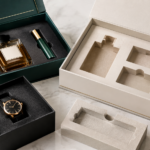
For example, a perfume bottle may need an insert around its base and sides to keep it centered. An electronics box may need separate spaces for the main device and accessories.
If the insert is planned after the outer box has already been finalized, the usable space may become too limited.
The better approach is to design the product layout, insert, and outer box as one packaging system.
How Material and Structure Affect Final Dimensions
Luxury rigid boxes use different luxury packaging materials and sturdy paperboard that is generally thicker than the material used for standard folding cartons.
That thickness affects the difference between internal and external dimensions.
The box style matters as well. A two-piece rigid box, magnetic closure box, drawer box, and book-style box do not all use the same structure.
You do not need to calculate every structural allowance yourself.
Instead, select the box style early and provide accurate product measurements to your packaging supplier. The final dieline can then be developed around the chosen structure.
Choosing Rigid Box Sizes for Jewelry and Watches
Jewelry packaging usually benefits from a compact design that keeps the product visually centered.
Measure the jewelry itself along with any pouch, card, cushion, or insert that will remain inside the box.
For watches, consider the dimensions of the watch around its display cushion rather than measuring the watch flat.
Avoid making the box unnecessarily large simply to create a luxury appearance. Premium presentation comes from proportion, material, finishing, and product placement—not size alone.
Choosing Sizes for Perfume and Cosmetics
Perfume bottles require careful measurement because decorative caps, unusual bottle shapes, and glass bases can change the space needed inside the box.
Measure the complete bottle, including the cap.
Cosmetics can vary even more. Jars, tubes, pumps, bottles, and multi-product skincare sets all have different shapes.
If several cosmetic products will be packaged together, arrange them in the desired order first. Then measure the complete layout and account for the insert that will separate or position them.
This creates a more accurate starting point than estimating the box size from individual product measurements alone.
Choosing Sizes for Electronics and Gift Sets
Electronics packaging often needs room for more than the main product.
Cables, chargers, manuals, accessories, and inserts can all affect the final rigid box dimensions.
Plan the complete product arrangement before deciding on the box.
The same principle applies to luxury gift sets. Decide where each product will sit and whether products will be placed side by side or on different levels.
A well-planned layout can make a gift box feel organized and premium without requiring excessive empty space.Box dimensions can also influence material use, shipping volume, and overall rigid box cost.
What The Boxology.US Considers When Sizing Custom Rigid Boxes
At The Boxology.US, custom rigid packaging can be developed around the product rather than limiting every project to predetermined dimensions.
The sizing process should consider the actual product dimensions, orientation, box style, insert requirements, material, and desired presentation.
For multi-product packaging, the relationship between the products also matters. A balanced layout can help create a cleaner presentation while using the available space efficiently.
This product-first approach is especially useful for luxury packaging because the box is not only a container. Its proportions and internal presentation contribute to how the customer experiences the product.
Common Rigid Box Sizing Mistakes
One of the biggest mistakes is choosing a box before finalizing the product and insert.
Other common problems include measuring only the main body of a product while forgetting the cap or closure, confusing internal dimensions with external dimensions, and adding too much empty space.
Another mistake is copying the dimensions of a competitor’s box.
Even similar products may have different containers, accessories, inserts, and presentation requirements.
Always base the final dimensions on your own product.
What Should You Send Your Packaging Supplier?
Providing complete information at the beginning can make custom sizing much easier.
Send your supplier:
- Exact product dimensions
- Product photos or a physical sample when possible
- Preferred product orientation
- Number of products inside each box
- Preferred rigid box style
- Insert requirements
- Artwork requirements
- Any accessories that must fit inside
If you are unsure about the final dimensions, provide the product information first instead of guessing a box size.
Rigid Box Size Checklist Before Production
Before approving your packaging, confirm that the actual product has been measured and its final orientation is clear.
Check that closures and accessories are included in the measurements, the insert has been planned, the box structure is finalized, and internal versus external dimensions are clearly understood.
Finally, review the dieline or sample to make sure the product fits as expected.
These checks can reduce the chance of discovering sizing problems after production begins.
Final Thoughts
Choosing the right luxury rigid box size is about creating the right fit, not simply choosing a larger package.
Start with accurate product measurements and then consider orientation, inserts, board thickness, box structure, and presentation. Jewelry, perfume, cosmetics, electronics, and gift sets each have different requirements, so fixed dimensions should not be treated as universal.
For brands that need packaging built around a specific product, The Boxology.US offers custom rigid boxes that can be developed around the required dimensions, structure, inserts, printing, and presentation.