 Skip to content








Premium packaging failures rarely begin on the printing press. In my experience managing high-volume custom production runs, structural issues are usually the source of expensive mistakes. A luxury finish means very little if the box loses dimensional stability, corners collapse during freight, or inserts fail to secure the product.
That’s where rigid box design becomes critical.
For e-commerce brands, subscription businesses, cosmetics companies, and corporate buyers, packaging has to perform beyond appearance. It needs to protect the product, support efficient fulfillment, and create an experience that reflects the value of the brand.
What procurement managers often miscalculate during sourcing is that structural engineering decisions influence everything from shipping costs and assembly efficiency to customer satisfaction and return rates.
This guide breaks down rigid box design from a manufacturing and engineering perspective to help brands make better sourcing decisions.
Quick Answer: What Is Rigid Box Design?
Rigid box design is the process of engineering premium packaging using thick chipboard, protective inserts, and decorative wrapping materials to achieve both structural strength and luxury presentation.
A well-designed rigid box balances:
- Product protection
- Brand presentation
- Production efficiency
- Shipping performance
- Unboxing experience
Unlike folding cartons, rigid boxes do not collapse. This gives them superior durability and a high perceived value.
What You’ll Learn in This Guide
- What rigid box design actually involves
- Why structure matters as much as appearance
- Popular rigid box styles and applications
- Chipboard thickness and material considerations
- Insert options for product protection
- Printing methods and finishing techniques
- How to improve the unboxing experience
- Advantages of sourcing rigid boxes in the USA
- Common design mistakes buyers should avoid
- Expert manufacturing insights from The Boxology
What Is Rigid Box Design?
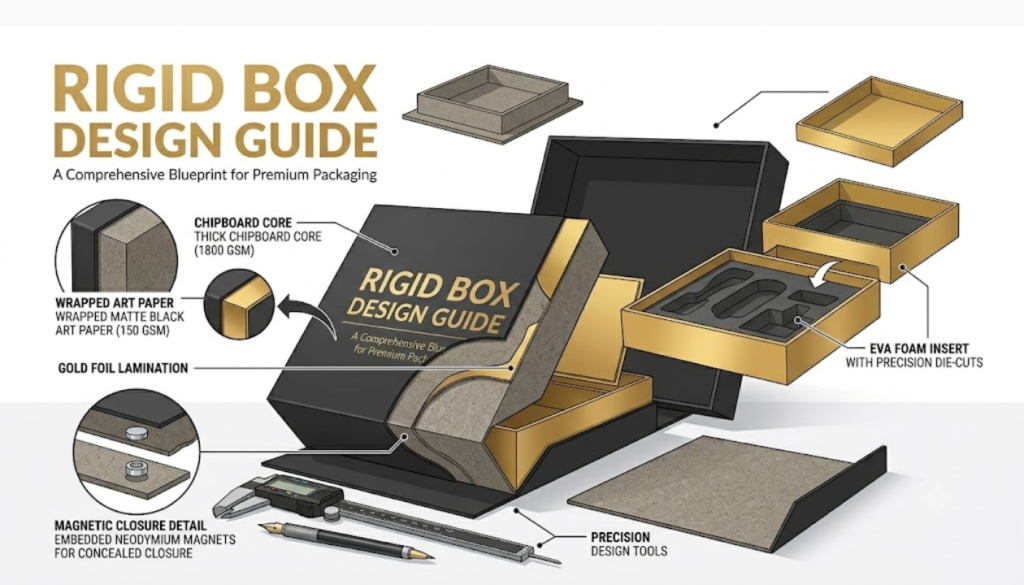
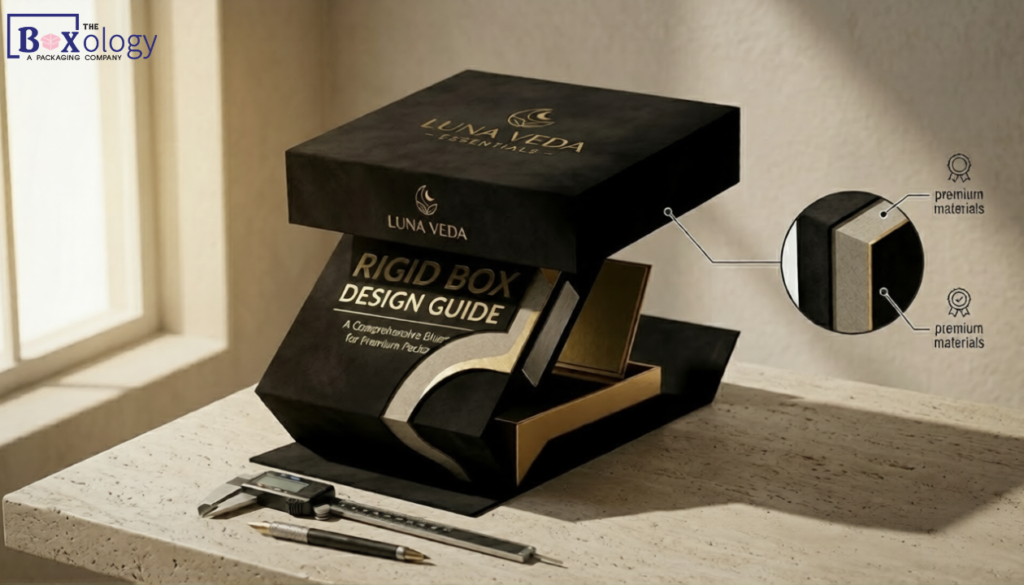
Rigid box design combines structural engineering with visual presentation. Unlike folding cartons, rigid boxes are manufactured from dense chipboard and wrapped with specialty paper, textured stock, or premium finishes to create durable packaging with a luxury appearance.
Because rigid boxes maintain their shape permanently, they provide superior protection and enhanced perceived value.
They’re commonly used for:
- Luxury cosmetics
- Electronics
- Jewelry
- Candles
- Subscription kits
- Apparel packaging
- Corporate gift sets
Brands choose rigid boxes because they create an experience that standard folding cartons cannot replicate.
Why Rigid Box Design Matters
Packaging failures are expensive.
When analyzing structural degradation during cross-country freight, the main culprit is usually improper dimensions or weak internal support systems.
Poor design often leads to:
- Product movement during transit
- Crushed corners
- Lid misalignment
- Increased return rates
- Higher dimensional shipping costs
- Negative customer experiences
Well-engineered rigid packaging improves:
- Structural integrity
- Brand presentation
- Product protection
- Customer retention
- Perceived product value
Popular Rigid Box Styles
Different products require different structures.
Two-Piece Rigid Boxes

A classic lid-and-base design that delivers excellent presentation.
Common applications:
- Candles
- Apparel
- Gift packaging
Magnetic Closure Boxes
Magnets integrated into the flap create a premium opening experience.
Ideal for:
- Electronics
- Subscription boxes
- Cosmetics
Drawer Boxes

Slide-out boxes provide functionality and luxury.
Ideal for:
- Jewelry
- Watches
- Accessories
Shoulder Neck Boxes
These structures expose an inner neck section for a refined appearance.
Ideal for:
- Perfumes
- Premium gift sets
Book Style Boxes
Book-style rigid boxes maximize branding space.
Ideal for:
- PR kits
- Corporate gifts
- Luxury products
Technical Materials & Structural Reality
In my experience managing high-volume custom production runs, board thickness is one of the most overlooked specifications.
Even a small variation in caliper can affect lid fit, automated wrapping efficiency, and long-term durability.
Chipboard Thickness Options
| Thickness | Typical Applications |
|---|---|
| 1.5 mm | Lightweight products |
| 2 mm | Standard retail packaging |
| 2.5 mm | Cosmetics and electronics |
| 3 mm | Heavy products and gift sets |
Wrapping Materials
Common options include:
- Art paper
- Textured paper
- Kraft paper
- Linen paper
- Soft-touch laminated stock
“Many rigid boxes use FSC-certified paper materials for sustainable packaging.”
Interior Insert Materials

Protection inside the box is equally important.
Popular insert materials include:
- EVA foam
- Velvet trays
- Paperboard inserts
- Satin linings
- Molded pulp inserts
What procurement managers often overlook is that insert design impacts labor efficiency and freight stability.
Printing and Premium Finishes
Premium packaging depends heavily on finishing quality.
Popular enhancements include:
Foil Stamping
Provides metallic branding elements.
Embossing
Creates raised textures that increase tactile appeal.
Debossing
Produces recessed branding effects.
Spot UV
Highlights logos and graphics.
Matte Lamination
Delivers a sophisticated appearance.
Soft-Touch Coating
Creates a velvet-like feel.
Soft-touch finishes look impressive, but fingerprints become more visible in high-volume retail environments. Matte lamination generally offers better durability.
Creating a Better Unboxing Experience

Customers remember experiences.
Simple additions can elevate perceived value:
- Magnetic closures
- Ribbon pulls
- Tissue paper wrapping
- Thank-you cards
- QR codes
- Product information inserts
These elements improve customer engagement and increase brand recall.
Domestic US Wholesale Advantages
Domestic sourcing provides operational benefits that many buyers underestimate.
Faster Lead Times
Shorter production cycles improve inventory planning.
Better Quality Control
Sampling and revisions become easier.
Lower Freight Risks
Ocean freight introduces moisture exposure and compression challenges.
Flexible MOQ Metrics
Domestic manufacturers often accommodate lower minimum order quantities.
Improved Communication
Design revisions and prototype approvals move faster.
The Boxology’s Expert Insight
Expert Manufacturing Tip
In my experience managing rigid box production, humidity exposure causes more structural problems than most brands realize. Chipboard naturally absorbs moisture, which can affect lid alignment and wrapping tolerances. Maintaining climate-controlled storage and allowing sufficient wrapping overlap reduces the risk of deformation during transportation and warehousing.
Comparison Table: Popular Rigid Box Styles
| Style | Setup Complexity | Structural Strength | Cost Effectiveness |
|---|---|---|---|
| Two-Piece Box | Low | High | Excellent |
| Magnetic Closure Box | Medium | High | Very Good |
| Drawer Box | Medium | High | Good |
| Shoulder Neck Box | High | Excellent | Moderate |
| Book Style Box | Medium | High | Very Good |
Common Mistakes Buyers Make
Avoid these costly mistakes:
- Oversized box dimensions
- Weak insert structures
- Excessive finishing layers
- Incorrect chipboard caliper
- Ignoring dimensional shipping costs
- Poor fit tolerances
Most structural failures begin during the design stage, not during production.
Final Thoughts
Rigid box design is much more than selecting colors and finishes. Structural integrity, chipboard thickness, insert engineering, and production tolerances all contribute to packaging performance.
At The Boxology.US, we help brands develop premium custom rigid boxes engineered for protection, presentation, and scalable production.
Need Expert Guidance?
Contact The Boxology.US for a free structural sample review, layout evaluation, and expert design consultation. Our team can help optimize materials, dimensions, and finishing options to ensure your rigid boxes perform as beautifully as they look.


