 Skip to content






Packaging lines stall for subtle reasons. Over a decade in manufacturing plants, I have seen multimillion-dollar production runs grind to a halt simply because a substrate label peeled off under cold-chain condensation or jammed an automated applicator tool. A custom label is not just a graphic placeholder on a box or bottle. It is a engineered surface layer that must withstand high-speed application equipment, extreme temperature shifts, and rough transit handling while retaining pristine branding.
For e-commerce brands and procurement officers, balancing visual impact with material survivability is a daily challenge. If your adhesive loses tack during freight or your die-cut sizing leaves unsightly edges across structural curves, brand perception plummets instantly.
Quick Answer: What makes an effective custom product label design?
An effective custom label combines the right substrate (paper, BOPP, or vinyl) with target-specific adhesives, precise sizing matching your packaging die-lines, and protective finishes. Balancing aesthetic artwork with industrial-grade durability ensures your product survives transport moisture and friction without sacrificing visual appeal.
In This Guide
- Technical Materials & Structural Reality
- Domestic US Wholesale Advantages
- The Boxology’s Expert Insight
- Label Substrates & Finishes: Data Comparison Table
- Strategic Label Design & Branding Optimization
- How to Calculate Exact Label Sizes for Container Profiles
- Final Steps & Consultative Support
Technical Materials & Structural Reality
Selecting the proper material for your custom printed labels requires an understanding of chemical composition, surface energy, and application environments. Choosing a label substrate purely based on print graphics usually leads to field failure. Selecting the proper material for your custom printed labels requires an understanding of chemical composition, surface energy, and application environments.
1. Paper vs. Synthetic Substrates
- Standard Paper Stock: Cost-effective for dry-goods packaging, secondary mailer boxes, and short-term retail displays. Available in uncoated, semi-gloss, or high-gloss finishes. However, paper lacks moisture barrier performance and will tear under tensile stress. Businesses comparing different label materials should consider moisture exposure, surface conditions, handling requirements, and the intended product environment before selecting a substrate.
- BOPP (Biaxially Oriented Polypropylene): The industry standard for cosmetic packaging labels, beverage containers, and personal care items. BOPP is impervious to water, oil, and most solvents. It offers high tensile strength, ensuring it will not stretch or tear on high-speed label applicators. Available in white, clear, and metallic chrome.
- Flexible Vinyl: Essential for curved, squeezable containers or outdoor applications requiring extreme UV resistance, thermal stability, and maximum pliability without flagging at the edges.
2. Adhesive Formulations
Adhesives are engineered for specific surface energies and thermal ranges:
- All-Temperature Acrylic: The baseline standard for corrugated shipping boxes and glass bottles handled at ambient room temperatures.
- Permanent Hot-Melt Rubber: Offers aggressive initial tack for challenging surfaces like textured plastic, recycled paperboard, or low-surface-energy substrates.
- Freezer-Grade Adhesives: Engineered to cure below 32°F (0°C). Crucial for food and beverage brands requiring cold-chain distribution without edge-lift.
3. Protective Finishes: Gloss vs. Matte Coatings
- UV Varnishes: Liquid coatings cured under ultraviolet light. Economical for high-volume custom printed labels, providing moderate scuff resistance.
- Laminates (Film Overlaminates): A clear layer of film laminated directly over the printed ink. Matte or gloss laminates offer maximum protection against abrasion, moisture exposure, and chemical leaching.
Domestic US Wholesale Advantages
When sourcing branded product labels at scale, procurement teams must evaluate total cost of ownership rather than surface-level unit pricing. For businesses purchasing custom labels wholesale, production volume, reorder frequency, lead times, and inventory requirements should be evaluated together rather than looking only at the initial unit price. Sourcing offshore often introduces critical supply chain risks that derail product launch timelines.
- Rapid Turnaround Times: Domestic US manufacturing eliminates oceanic freight delays, reducing lead times from 6–8 weeks down to 3–5 business days for short runs and under 10 days for high-volume wholesale orders.
- Stringent Quality Control: US label converters operate under ISO-certified quality metrics. In my experience managing high-volume custom production runs, domestic facilities maintain strictly calibrated color matching systems (Pantone PMS alignment) and tight registration tolerances (±0.015 inches).
- Freight and Tooling Savings: Shipping rolls or sheets of custom labels domestically significantly reduces freight overhead compared to heavy rigid packaging imports. Furthermore, standard domestic die shapes eliminate upfront tooling costs for common container profiles.
- Flexibility with MOQ Metrics: Low Minimum Order Quantities allow emerging DTC brands to execute dynamic product runs, seasonal updates, or localized compliance revisions without tying up capital in obsolete inventory.
The Boxology’s Expert Insight
Pro-Level Tip: Factoring Liner Caliper and Tension in Automated Application
What procurement managers often miscalculate during sourcing is liner thickness and release force. If you use automated labeling equipment, specifying the wrong backing liner (such as standard 40# glassine versus a high-tensile 1.2 mil PET liner) will cause web snaps under high application speeds. PET liners allow higher web tension, lower registration drift, and zero liner breakage, keeping your automated packing lines operating at maximum efficiency. Always match your liner material to your machine applicator specifications before approving bulk production runs.
Substrates & Finishes: Performance Comparison
| Material & Finish Grade | Structural Integrity | Moisture & Oil Resistance | Setup & Unit Cost | Best Application Profile |
| Semi-Gloss Paper / UV Varnish | Low | Poor (Absorbs liquid) | Low Setup / Extremely Low Cost | Dry retail boxes, shipping mailers, secondary packaging |
| White BOPP / Gloss Laminate | High | Excellent (100% Waterproof) | Moderate Setup / Cost-Effective | Health & beauty, vitamins, craft beverages, oil bottles |
| Clear BOPP / Matte Laminate | High | Excellent (100% Waterproof) | Moderate Setup / Mid-Range Cost | “No-label look” on glass jars, luxury cosmetic packaging |
| Textured Estate Paper / Uncoated | Moderate | Fair (Requires barrier spray) | Moderate Setup / Premium Cost | Wine & spirits, luxury candle brands, artisanal goods |
| Squeezable Vinyl / Heavy Laminate | Maximum | Superior | Higher Setup / Premium Cost | Squeeze tubes, flexible pouches, harsh outdoor conditions |
Strategic Label Design & Branding Optimization
Translating product packaging labels into high-converting branded product labels requires structural visual hierarchy. Busy retail shelves give brands fewer than three seconds to command consumer attention.
- Establish Visual Hierarchy: Position your brand logo at the primary optical focal point. Ensure the product name, core benefit statement, and net weight/volume are clearly legible from 3–5 feet away.
- Contrast and White Space: Avoid clutter. High visual contrast between background substrates and typography ensures high legibility under harsh retail lighting or low-light e-commerce product photography.
- Utilize Metallic & Spot Finishes: Incorporate cold foil stamping or spot gloss UV accents on matte substrates to establish a premium hand-feel for luxury retail lines.
- Regulatory Compliance Spacing: Allocate designated zones for barcode graphics (UPC/EAN), ingredient panels, batch codes, and nutrition panels early in the artwork layout phase. Follow established barcode placement guidelines to help maintain reliable scanning and avoid costly artwork revisions.
How to Calculate Exact Label Sizes for Container Profiles
A common error during custom label design is specifying dimensions without accounting for container taper or overlap seams. These dimensional considerations become especially important when developing custom labels for packaging, because the finished label must follow the physical geometry of the container or box.
- Measuring Cylinders (Jars & Bottles):
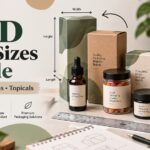
- Width Calculation: Determine the container circumference (Circumference=π×Diameter). Subtract 0.125 to 0.25 inches for a gap, or add 0.375 inches if a wrap-around overlap is required.
- Height Calculation: Measure the straight vertical wall. Deduct 0.125 inches top and bottom to prevent edge flagging near shoulder or heel curves.
- Measuring Tapered Containers:
- Tapered cups or jars require arc-shaped label die-lines. Applying a straight rectangular label to a tapered container creates creasing, bubbling, and misaligned graphics.
- Box Surface Labels:
- Ensure labels remain at least 0.25 inches clear of score lines, folded edges, and corner tucks to prevent peeling caused by board flex.
Optimize Your Packaging Strategy
Precision custom label design protects your inventory investment, elevates brand equity, and streamlines production lines. Whether you need waterproof product labels for food and beverage distribution or luxury spot-finish roll labels for cosmetic packaging, technical precision is paramount.If you are evaluating custom printed labels for a new product line or recurring wholesale production, the material, adhesive, finish, and application method should be reviewed together before final approval.
Contact the structural packaging specialists at The Boxology.US today for a free structural sample review, custom layout test, or expert design consultation. Let our team audit your die-lines and substrate specs to guarantee flawless execution on your next production run.