 Skip to content

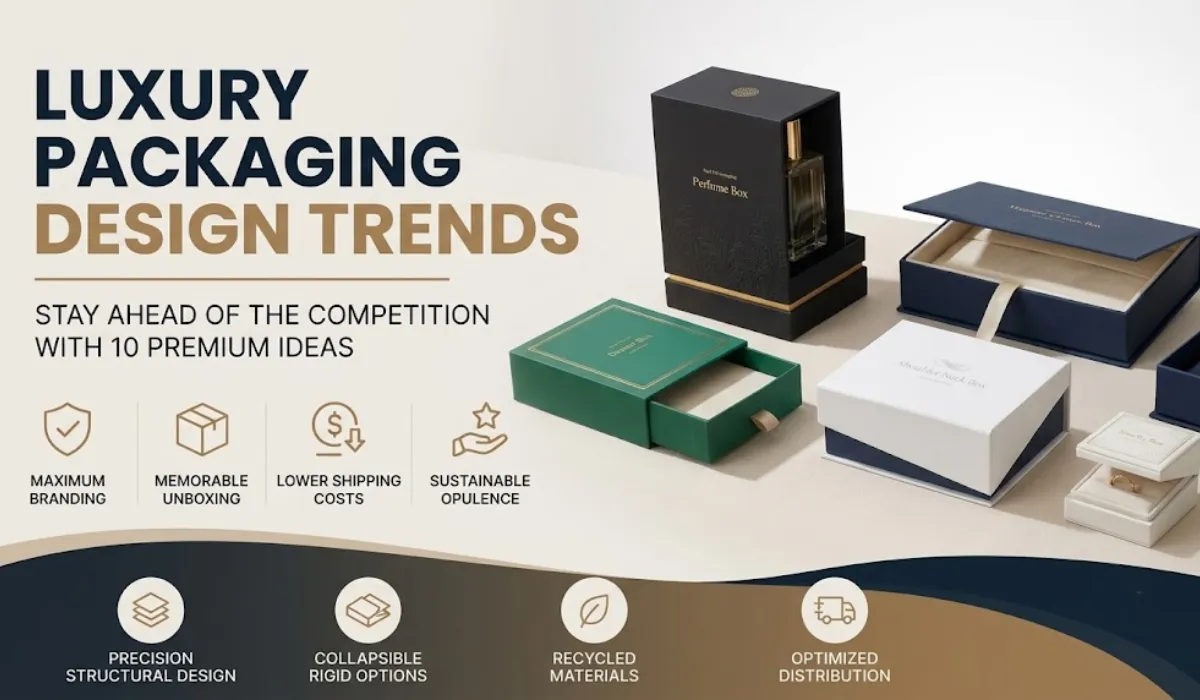


Luxury packaging has evolved beyond premium materials and decorative finishes. Today’s customers evaluate packaging as part of the overall product experience, making structural design, functionality, sustainability, and presentation just as important as the product itself. For premium brands, packaging is often the first physical interaction a customer has with the business, influencing perceived value before the product is even used.
In my experience managing premium rigid packaging projects, the brands that achieve the strongest customer engagement rarely rely on excessive decoration. Instead, they focus on structural precision, carefully selected materials, refined finishing techniques, and thoughtful unboxing experiences. A well-designed package not only protects the product but also strengthens brand recognition, encourages social sharing, and increases the likelihood of repeat purchases.
Businesses investing in luxury packaging should view design trends as long-term strategic decisions rather than short-term visual upgrades. The right combination of structure, materials, and finishes creates packaging that performs efficiently during manufacturing while delivering a premium experience for the customer.

Quick Answer
What are the latest luxury packaging design trends?
The most influential luxury packaging design trends focus on clean structural designs, premium tactile materials, sustainable production, and memorable unboxing experiences. Modern brands increasingly use rigid boxes, magnetic closures, specialty papers, soft-touch finishes, and minimalist branding to create packaging that communicates quality without unnecessary complexity. The most successful designs balance aesthetics, functionality, manufacturing efficiency, and customer experience.
Key Takeaways
- Minimalist designs continue to dominate premium packaging.
- Specialty materials create stronger brand perception.
- Structural packaging adds both protection and perceived value.
- Sustainable luxury packaging continues to grow across premium industries.
- Interactive unboxing experiences increase customer engagement.
In This Guide
In this article, you’ll learn:
- Why luxury packaging design influences purchasing decisions.
- The leading luxury packaging trends for premium brands.
- How structural design affects product presentation.
- Which finishing techniques deliver the highest perceived value.
- How sustainability is shaping luxury packaging.
- Expert recommendations for businesses developing custom luxury packaging.
Why Luxury Packaging Design Matters
Luxury packaging design directly influences how customers perceive product quality, brand credibility, and overall value.
Premium packaging serves multiple purposes beyond protecting the product. It communicates brand positioning, differentiates products on crowded retail shelves, and creates an emotional connection during the unboxing experience.
Packaging designers typically evaluate:
- Structural engineering
- Material selection
- Visual hierarchy
- Opening mechanism
- Product presentation
- Printing quality
- Customer interaction
- Manufacturing efficiency
What many procurement managers underestimate is that improving structural design often delivers greater customer impact than simply adding expensive decorative finishes.
Trend #1: Minimalist Luxury Packaging

Minimalist packaging emphasizes quality through simplicity rather than excessive graphics or decoration.
Many premium brands have shifted toward clean layouts, subtle branding, and restrained color palettes. Instead of overwhelming customers with visual elements, minimalist packaging highlights craftsmanship, material quality, and structural precision.
Common characteristics include:
- Neutral color palettes
- Matte finishes
- Small, refined logos
- High-quality paper wraps
- Precise typography
- Hidden structural details
Minimalist designs also improve manufacturing consistency because fewer decorative elements reduce registration challenges during printing and finishing.
Trend #2: Premium Textures and Specialty Materials

Texture has become one of the most powerful design elements in luxury packaging because customers experience it before they interact with the product itself.
Rather than relying solely on printed graphics, premium brands increasingly incorporate tactile materials that create a stronger sensory experience.
Popular choices include:
- Linen-textured paper
- Cotton paper
- Soft-touch lamination
- Pearl finish paper
- Fabric wraps
- Leatherette coverings
Many businesses combine these materials with premium luxury packaging materials to create packaging that feels distinctive while maintaining excellent structural performance.
In my experience overseeing premium packaging production, textured materials often generate a stronger perception of quality than additional printed decoration because they engage both visual and tactile senses.
Trend #3: Magnetic Closure Boxes Continue to Define Premium Packaging
Magnetic closure boxes remain one of the strongest luxury packaging trends because they combine elegant presentation with exceptional functionality.
The opening experience has become a defining characteristic of premium packaging. A well-engineered magnetic closure creates a smooth, controlled opening that immediately communicates quality.
Today, luxury brands use magnetic closure boxes for:
Unlike conventional tuck-end cartons, magnetic closures improve structural stability while allowing repeated opening and closing without compromising the box’s appearance.
From a manufacturing standpoint, magnetic placement requires tight production tolerances. Even slight alignment errors during assembly can affect the closing mechanism, making quality control essential during high-volume production.
Trend #4: Drawer Style Packaging Creates a Better Unboxing Experience

Drawer-style packaging transforms product presentation into a premium customer experience while improving product protection.
Slide-out drawer boxes have become increasingly popular because they reveal products gradually, creating anticipation and encouraging customers to interact with the packaging.
Common applications include:
- Jewelry
- Watches
- Perfume collections
- Technology accessories
- Luxury chocolates
- Corporate gifts
Many premium brands pair drawer boxes with precision die-cut inserts to keep products securely positioned throughout shipping while maintaining a clean presentation.
In my experience, drawer-style packaging performs particularly well for social media content because the opening sequence naturally encourages customers to share their unboxing experience.
Trend #5: Collapsible Luxury Packaging
Collapsible rigid packaging delivers the appearance of traditional rigid boxes while significantly reducing storage and shipping costs.
As brands look for ways to improve operational efficiency, many are replacing permanently assembled boxes with collapsible rigid boxes that fold flat before use.
Key advantages include:
- Lower warehouse storage requirements
- Reduced inbound freight costs
- Faster inventory handling
- Premium appearance after assembly
- Excellent structural performance
For businesses shipping nationwide, collapsible designs can reduce logistics expenses without sacrificing the premium presentation customers expect from luxury packaging.
Trend #6: Sustainable Luxury Packaging

Sustainability has shifted from a marketing feature to an essential design consideration for premium brands.
Luxury packaging is no longer expected to be excessive. Instead, consumers increasingly value packaging that combines premium presentation with environmentally responsible materials and production methods.
Popular sustainable design practices include:
- Recycled rigid greyboard
- FSC-certified specialty papers
- Plastic-free inserts
- Water-based coatings
- Soy-based inks
- Right-sized packaging
Many premium brands are discovering that environmentally responsible packaging enhances brand credibility while also reducing unnecessary material usage.
The most effective sustainable designs begin with selecting appropriate luxury packaging materials that support both environmental goals and long-term structural performance.
Trend #7: Premium Printing & Finishing Techniques

Luxury packaging relies on refined finishing techniques to create visual depth and tactile distinction without overwhelming the overall design.
Rather than combining every available decorative process, premium brands carefully select finishes that reinforce their identity.
The most widely used finishing options include:
- Foil stamping
- Embossing
- Debossing
- Spot UV coating
- Soft-touch lamination
- Metallic inks
- Edge painting
- Satin or matte lamination
When managing premium production runs, I have found that combining two or three complementary finishes often produces a more sophisticated result than applying multiple decorative effects to a single package.
Successful luxury packaging is built on balance, where each finishing technique supports the brand rather than competing for attention.
The Boxology’s Expert Insight
One of the biggest misconceptions about luxury packaging is that adding more decorative elements automatically creates a premium product. In reality, premium packaging is achieved through consistency. The most successful projects combine precise structural engineering, carefully selected materials, restrained finishing techniques, and efficient manufacturing processes. Before approving a production run, always evaluate the complete package—including opening experience, material compatibility, insert fit, and shipping performance—rather than judging individual design elements in isolation.
Comparison of Current Luxury Packaging Design Trends

| Design Trend | Premium Appeal | Manufacturing Complexity | Cost Impact | Best Applications |
| Minimalist Design | ★★★★★ | ★★☆☆☆ | ★★★☆☆ | Cosmetics, skincare, fashion |
| Magnetic Closure Boxes | ★★★★★ | ★★★★☆ | ★★★★☆ | Corporate gifts, electronics, luxury retail |
| Drawer Boxes | ★★★★★ | ★★★★☆ | ★★★★☆ | Jewelry, perfumes, premium accessories |
| Collapsible Rigid Boxes | ★★★★★ | ★★★★☆ | ★★★☆☆ | E-commerce, subscription brands, wholesale |
| Sustainable Luxury Packaging | ★★★★★ | ★★★☆☆ | ★★★☆☆ | Eco-conscious premium brands |
| Premium Foil & Embossing | ★★★★☆ | ★★★☆☆ | ★★★★☆ | High-end retail packaging |
Trend #8: Smart & Interactive Packaging
Interactive packaging creates a stronger connection between brands and customers by extending the experience beyond the physical product.
Luxury packaging is increasingly being designed to encourage customer engagement rather than simply protect the product. Brands are incorporating subtle interactive elements that enhance authenticity, storytelling, and post-purchase engagement.
Popular features include:
- QR codes for product authentication
- NFC-enabled premium packaging
- Digital product guides
- Brand story cards
- Personalized welcome messages
- Augmented reality experiences
For premium brands, these features should complement the packaging—not distract from it. The best interactive designs remain clean, intuitive, and consistent with the overall luxury experience.
Trend #9: Personalized Luxury Packaging
Personalization allows premium brands to create memorable customer experiences while strengthening long-term brand loyalty.
Consumers increasingly expect exclusive experiences, especially when purchasing luxury products. Personalized packaging transforms a standard purchase into something that feels custom-made.
Common personalization options include:
- Customer names
- Limited-edition packaging
- Seasonal collections
- Personalized thank-you cards
- Variable data printing
- Corporate branding for B2B gifting
In my experience working with premium packaging programs, personalization delivers the greatest impact when it remains subtle. Small customized details often feel more premium than excessive branding.
Trend #10: Structural Simplicity with Premium Performance
Modern luxury packaging focuses on intelligent structural engineering rather than unnecessary complexity.
Many premium brands are simplifying packaging structures while improving functionality. Instead of elaborate constructions with multiple unnecessary components, designers now prioritize efficient engineering that delivers durability, elegance, and manufacturing consistency.
Characteristics include:
- Clean structural lines
- Hidden locking mechanisms
- Precision die-cut inserts
- Efficient board utilization
- Reduced material waste
- Faster assembly
Well-engineered rigid boxes prove that premium packaging does not need excessive decoration to create a lasting impression.
What manufacturing teams consistently observe is that simpler structural designs often produce higher-quality results because there are fewer opportunities for production errors, misalignment, or material waste.
Common Luxury Packaging Design Mistakes
Even premium brands occasionally make costly packaging decisions.
Following Trends Instead of Brand Identity
Not every packaging trend suits every business. Successful packaging should reinforce the brand rather than imitate competitors.
Prioritizing Appearance Over Function
Luxury packaging should protect the product as effectively as it promotes it. A visually impressive box that fails during shipping ultimately damages the customer experience.
Using Too Many Decorative Finishes
Combining foil stamping, embossing, Spot UV, metallic inks, textured papers, and multiple coatings on the same package often creates visual clutter rather than sophistication.
Ignoring Manufacturing Efficiency
Complex structures may appear impressive during prototyping but can increase tooling costs, production time, and quality control challenges during large-scale manufacturing.
Overlooking Sustainability
Today’s premium customers increasingly value environmentally responsible packaging. Ignoring recyclable materials and efficient structural design can weaken overall brand perception.

Final Thoughts
Luxury packaging design continues to evolve as brands balance aesthetics, functionality, sustainability, and operational efficiency. While design trends may change over time, the principles of premium packaging remain consistent: exceptional materials, thoughtful structural engineering, refined finishing techniques, and a customer-focused unboxing experience.
Whether you choose minimalist layouts, magnetic closures, drawer-style boxes, collapsible rigid packaging, or sustainable materials, every design decision should support both the product and the brand behind it.
In my experience managing premium packaging production, the most successful luxury packaging projects are never driven by trends alone. They are built on careful planning, precise engineering, and an understanding of how customers interact with packaging from the moment it arrives until the product is removed.
Businesses that invest in well-designed luxury packaging not only improve product presentation but also strengthen customer trust, increase perceived value, and create a lasting competitive advantage.
Create Luxury Packaging That Reflects Your Brand
Exceptional packaging begins with intelligent design. The right combination of structure, premium materials, and refined finishes creates an experience that protects your product while reinforcing your brand’s value.
At The Boxology, we help businesses develop custom rigid boxes and luxury packaging solutions engineered for premium presentation, manufacturing efficiency, and nationwide wholesale production. From concept development to structural prototyping and material selection, our packaging specialists work with brands to create packaging that performs as impressively as it looks.


