Skip to content

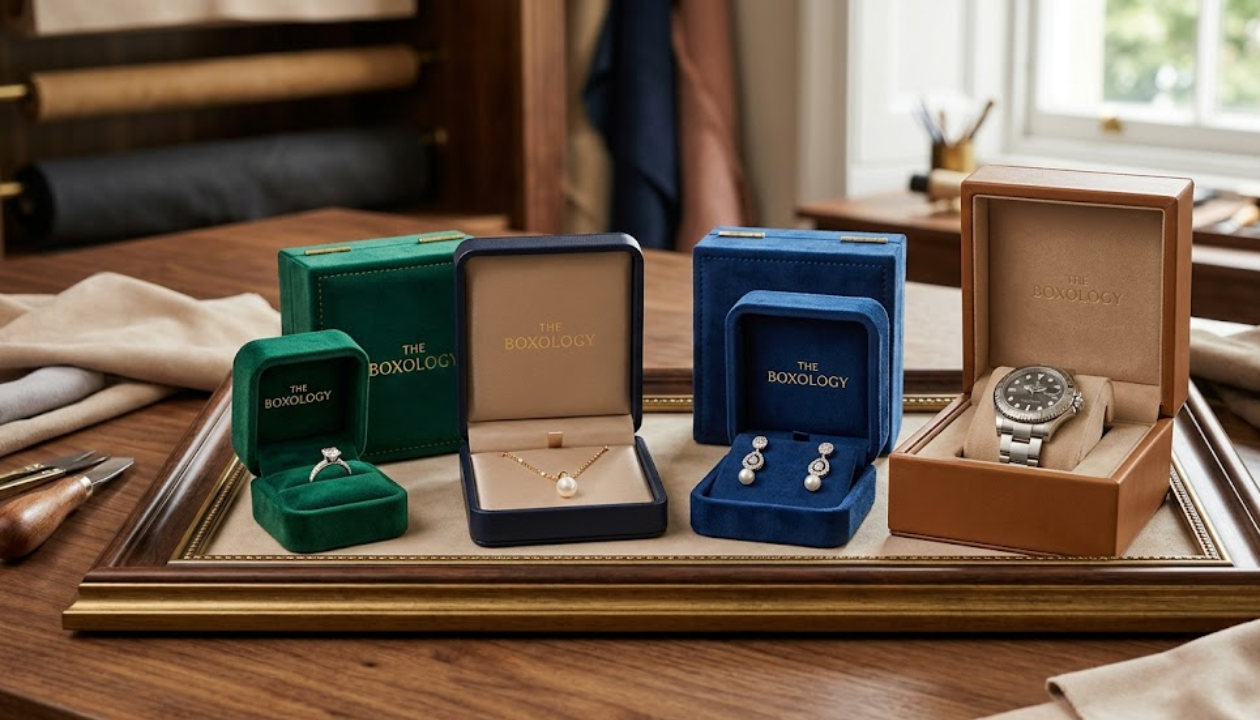

Jewelry packaging carries a heavier responsibility than most product categories. A customer may spend a few dollars on fashion jewelry or several thousand on a luxury engagement ring, yet the box often becomes the first physical touchpoint that shapes perceived value.
For many retailers, e-commerce brands, and procurement teams, sourcing jewelry boxes at wholesale scale creates a unique set of challenges. Structural durability must protect delicate products. Branding requirements demand premium finishes. Shipping costs must remain manageable. Production timelines cannot disrupt product launches.
In my experience managing high-volume custom production runs, businesses frequently focus on aesthetics first and structural performance second. That approach often leads to damaged inventory, elevated freight expenses, and inconsistent customer experiences.
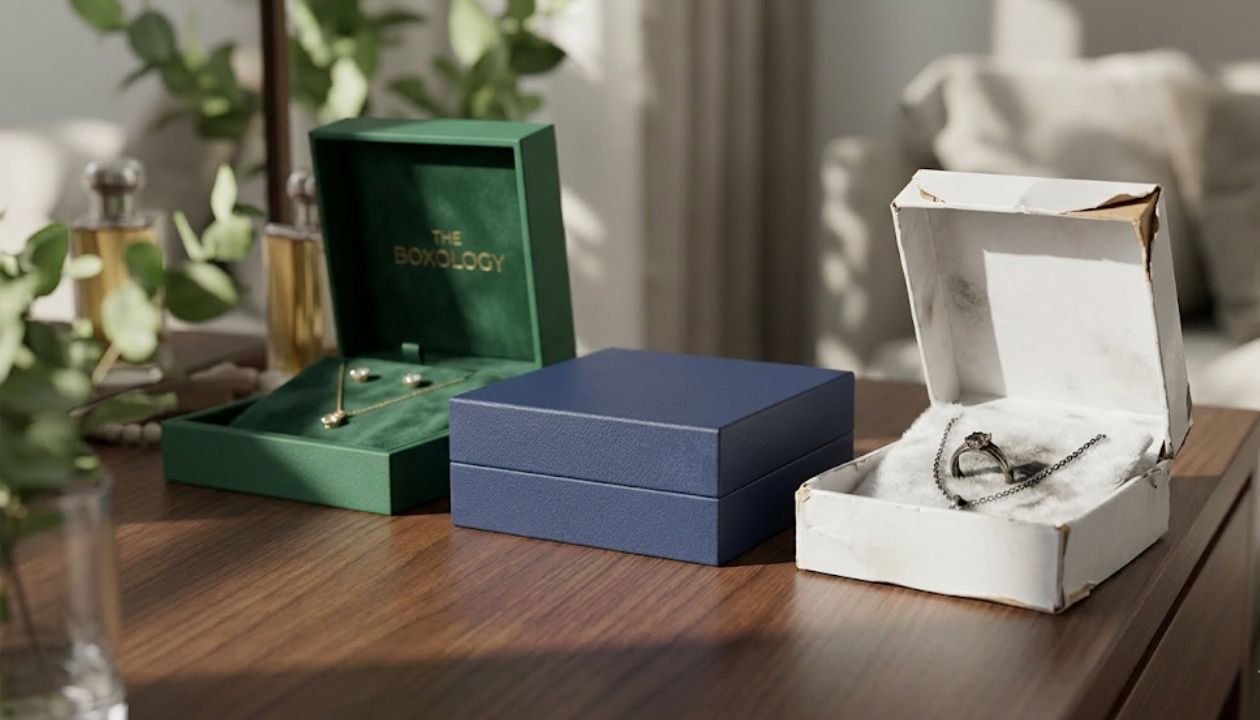
The reality is simple: a jewelry box is not just a presentation piece. It is a protective packaging system engineered to survive manufacturing, warehousing, transportation, retail display, and customer handling.
Understanding the structural and commercial variables behind custom jewelry packaging helps brands make better purchasing decisions while reducing avoidable costs throughout the supply chain.
Understanding the Structural Requirements of Jewelry Packaging
Unlike standard folding cartons, jewelry boxes typically require rigid construction, decorative finishes, and interior retention systems.
The structural requirements vary significantly depending on the jewelry category.
Ring Boxes
Ring boxes require precise cavity dimensions and insert engineering. Excessive movement inside the box can create abrasion on precious metals or gemstones during transit.
Necklace Boxes
Necklace boxes must prevent chain tangling while maintaining presentation quality. Insert design becomes equally important as the exterior structure.
Earring Boxes
Earring boxes require secure card retention systems and precise positioning to prevent movement during handling.
Bracelet Boxes and Bangle Boxes
Bracelet packaging demands greater internal depth and reinforced sidewall strength due to larger product dimensions.
Watch Boxes
Watch boxes face the highest structural expectations within the jewelry category. Cushion density, rigid board thickness, and corner strength become critical factors for product protection.
Cufflink Boxes and Custom Anklet Boxes
Although smaller in size, these products still require accurate fit tolerances to maintain premium presentation and prevent unnecessary material costs.
What procurement managers often miscalculate during sourcing is that every additional millimeter affects material consumption, master carton efficiency, and freight expenses.
A box that appears only slightly larger on a dieline may significantly increase shipping costs once production scales into thousands of units.
Material Selection: Where Structural Performance Begins

The material specification directly determines durability, appearance, and production cost.
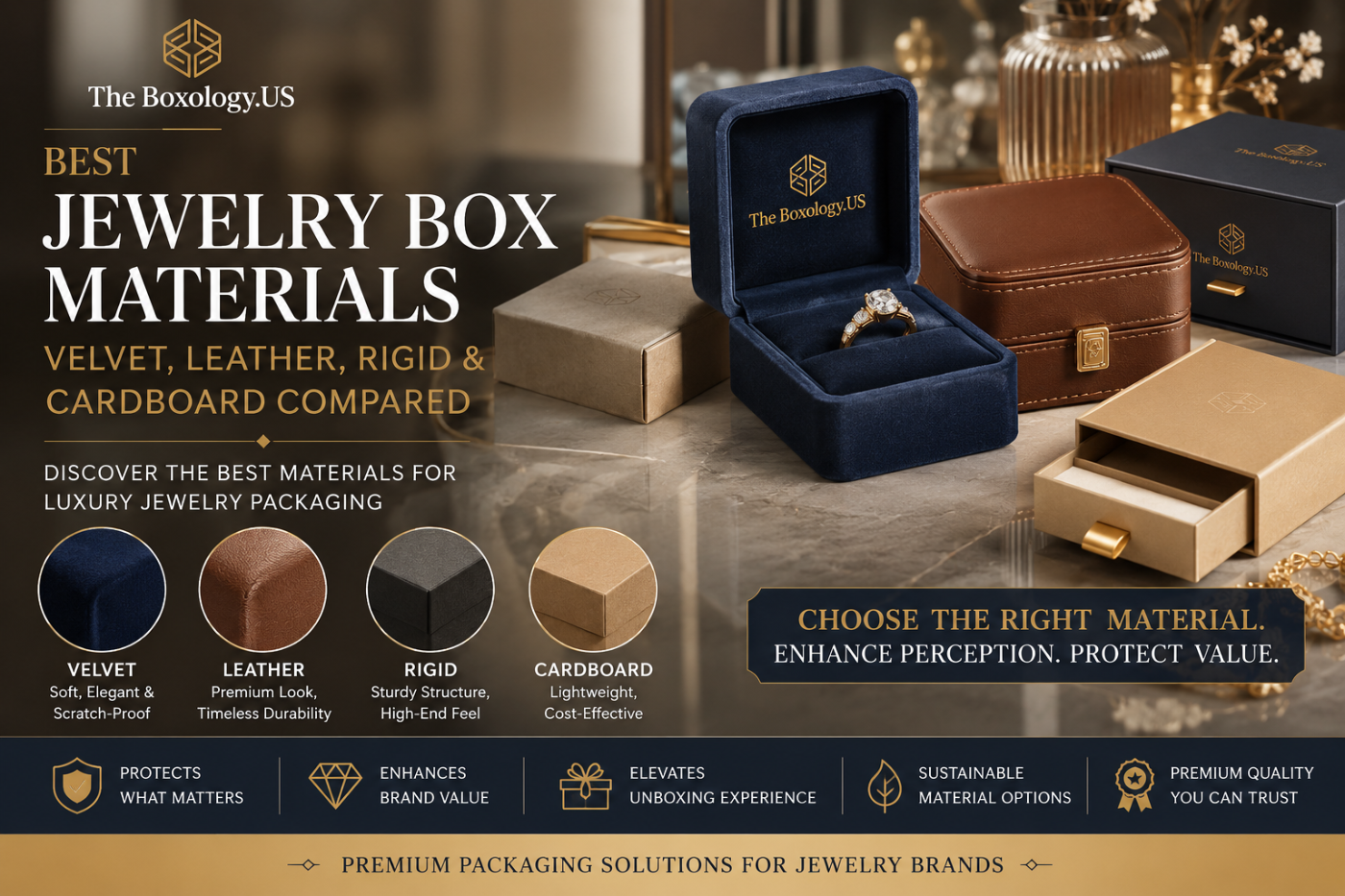
Rigid Chipboard Construction
Most premium jewelry packaging utilizes rigid chipboard construction.
Common caliper options include:
- 800 GSM board
- 1000 GSM board
- 1200 GSM board
- 1400 GSM board
For luxury jewelry applications, 1200 GSM to 1400 GSM rigid board is often preferred due to superior compression resistance and premium feel.
For cost-sensitive retail packaging, 800 GSM to 1000 GSM options frequently provide sufficient protection while reducing material expenses.
Kraft Jewelry Boxes
Kraft jewelry boxes have become increasingly popular among sustainable brands.
Benefits include:
- Recyclable materials
- Lower finishing costs
- Natural appearance
- Reduced production complexity
However, kraft substrates may show scuffing more readily than laminated rigid constructions. Brands shipping nationwide should evaluate transit conditions before finalizing specifications.
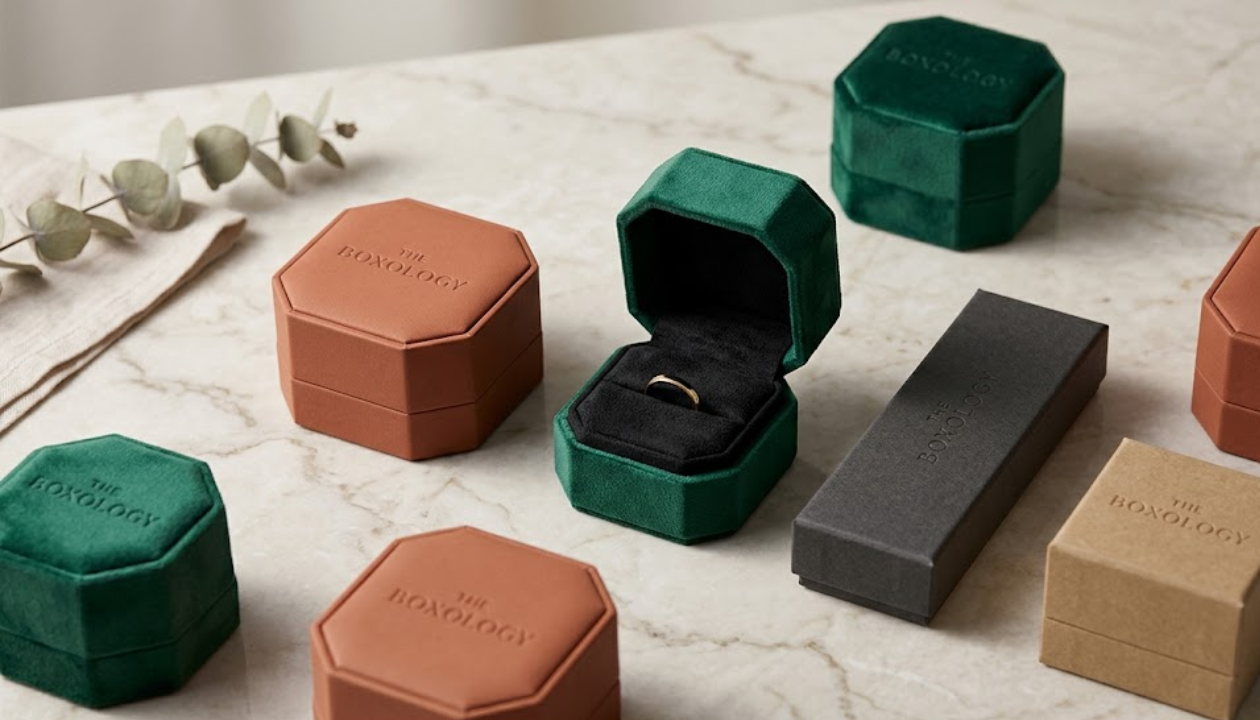
Specialty Papers and Wraps
Premium jewelry boxes frequently utilize:
- Textured paper wraps
- Soft-touch lamination
- Linen finishes
- Metallic paper stocks
- Velvet-lined interiors
Each finish impacts both appearance and production lead times.
For example, foil stamping and embossing require additional tooling and setup procedures that must be accounted for during project planning.
Domestic Wholesale Production: The Practical Advantages for US Brands
Many businesses compare overseas sourcing against domestic manufacturing solely on unit price.
That comparison is incomplete.
When evaluating total acquisition cost, several factors deserve attention.
Shorter Lead Times
Domestic production generally provides:
- Faster proof approvals
- Reduced transit delays
- Easier project communication
- Quicker reorders
For seasonal launches, these advantages often outweigh minor differences in unit cost.
Better Quality Control Visibility
Domestic manufacturing allows tighter oversight of:
- Color consistency
- Structural assembly
- Insert fitment
- Print registration
- Finishing quality
In high-end jewelry packaging, small defects become highly visible.
Misaligned foil stamping or inconsistent corner wrapping can undermine premium brand perception.
Freight Cost Predictability
When analyzing structural degradation during cross-country freight, the main culprit is usually repeated compression and vibration rather than direct impact.
Domestic production minimizes the number of handling points throughout the supply chain.
Fewer touchpoints generally result in:
- Reduced damage rates
- Lower replacement costs
- Better inventory accuracy
MOQ Realities
Many buyers assume wholesale production requires extremely large order quantities.
That assumption is increasingly outdated.
Modern packaging manufacturers often accommodate:
- Prototype runs
- Market testing batches
- Mid-volume production
- Enterprise-scale procurement
The ideal MOQ depends on:
- Box dimensions
- Tooling requirements
- Finishing complexity
- Material selection
Businesses should evaluate total landed cost rather than focusing solely on minimum quantities.
The Boxology’s Expert Insight

Manufacturing Tip: Optimize Internal Dimensions Before Artwork Approval
One of the most common cost increases we encounter occurs when brands approve artwork before finalizing product dimensions. A jewelry box that is oversized by even 0.25 inches can reduce pallet density, increase master carton volume, and raise freight expenses across every shipment. Before approving dielines, conduct a physical fit test using actual products, inserts, protective tissue, and any retail collateral. This simple validation step frequently prevents costly redesigns and production delays.
Comparing Popular Jewelry Box Styles

| Jewelry Box Type | Setup Complexity | Structural Strength | Cost-Effectiveness |
| Kraft Jewelry Boxes | Low | Moderate | Excellent |
| Ring Boxes | Moderate | High | Very Good |
| Earring Boxes | Moderate | High | Very Good |
| Necklace Boxes | Moderate | High | Good |
| Bracelet Boxes | Moderate | High | Good |
| Bangle Boxes | Moderate | High | Good |
| Cufflink Boxes | Low | Moderate | Excellent |
| Custom Anklet Boxes | Moderate | Moderate | Good |
| Watch Boxes | High | Excellent | Moderate |
| Premium Magnetic Jewelry Boxes | High | Excellent | Moderate |
Common Procurement Mistakes That Increase Packaging Costs
Over the years, several recurring sourcing mistakes appear across jewelry packaging projects.
Selecting Oversized Packaging
Larger boxes increase:
- Material consumption
- Warehousing costs
- Freight expenses
- Fulfillment labor requirements
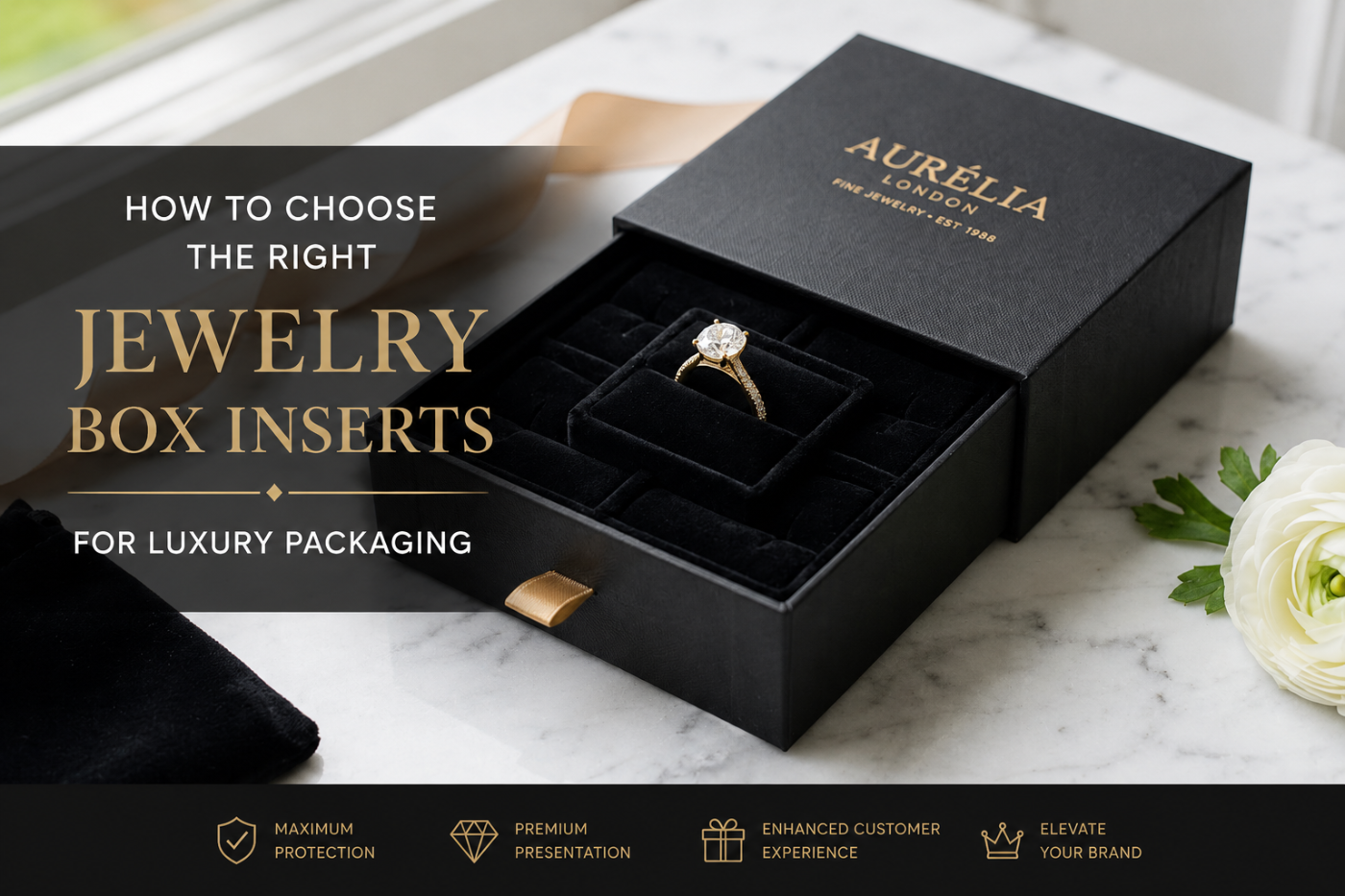
Ignoring Insert Engineering
The insert is often responsible for product protection.
Poor insert design frequently causes:
- Product movement
- Scratching
- Customer complaints
- Increased returns
Underestimating Tooling Requirements
Premium features such as:
- Embossing
- Debossing
- Foil stamping
- Magnetic closures
typically require additional tooling investments.
These costs should be evaluated early during budgeting.
Focusing Exclusively on Unit Cost
The lowest-priced packaging option is not always the lowest-cost solution.
Factors such as damage rates, replacement orders, storage expenses, and customer perception ultimately affect profitability.
What Modern Jewelry Brands Expect from Wholesale Packaging
Today’s jewelry buyers evaluate packaging differently than they did several years ago.
Packaging must support multiple objectives simultaneously:
Protection
- Prevent structural failure during shipping
Brand Presentation
- Enhance perceived product value
Operational Efficiency
- Support efficient fulfillment processes
Sustainability
- Reduce unnecessary material consumption
Scalability
- Accommodate future growth without redesigning packaging systems
The most successful jewelry brands treat packaging as a strategic business asset rather than a procurement afterthought.
A properly engineered jewelry box improves customer experience, protects inventory, supports marketing efforts, and reduces long-term operational costs.
Partner with The Boxology for Custom Jewelry Boxes Wholesale

Whether you’re sourcing ring boxes, necklace boxes, earring boxes, bracelet boxes, watch boxes, cufflink boxes, bangle boxes, custom anklet boxes, or eco-friendly kraft jewelry boxes, structural performance should be evaluated alongside branding objectives.
The Boxology works with retailers, e-commerce brands, subscription businesses, and corporate procurement teams across the United States to develop packaging solutions that balance presentation, protection, and production efficiency.
Contact The Boxology today for a free structural sample review, packaging layout assessment, or expert design consultation. Our team can evaluate your product dimensions, material requirements, freight considerations, and branding goals before production begins, helping you avoid costly mistakes and achieve a packaging solution built for long-term growth.