Skip to content


Launching a jewelry collection in 2026 requires more than premium craftsmanship. Packaging has become a measurable part of product value, influencing customer perception, brand recall, and even shipping performance. Retail buyers, direct-to-consumer brands, and subscription businesses are investing in jewelry boxes that balance aesthetics with structural reliability, sustainability, and production efficiency.
In my experience managing high-volume custom packaging projects, brands often focus heavily on finishes while overlooking structural specifications such as board thickness, insert engineering, and dimensional accuracy. Those decisions affect warehouse storage, freight costs, product protection, and the overall unboxing experience far more than most procurement teams expect.
The strongest jewelry packaging trends this year are not driven by decoration alone. They reflect changes in consumer expectations, environmental regulations, luxury retail presentation, and e-commerce logistics. Businesses sourcing custom jewelry boxes are increasingly prioritizing recyclable materials, premium rigid construction, efficient shipping dimensions, and personalized branding that creates a memorable customer experience without inflating production costs.
Quick Answer
The top jewelry box trends in 2026 focus on sustainable materials, vintage-inspired luxury finishes, smart packaging technology, premium rigid box construction, and customized branding. Businesses that combine structural durability with modern design are better positioned to improve customer experience, reduce shipping damage, and strengthen long-term brand recognition.
In This Guide
This article covers the leading jewelry box trends shaping the packaging industry in 2026, including:
- Why sustainable packaging is becoming a purchasing requirement rather than a marketing feature.
- How vintage-inspired finishes are returning to luxury retail packaging.
- The growing role of smart packaging technologies.
- Material and structural choices that improve durability and presentation.
- Manufacturing considerations for wholesale production in the United States.
- Practical recommendations for brands planning custom jewelry packaging projects.
Why Jewelry Packaging Trends Matter More Than Ever
Jewelry packaging is no longer viewed as secondary packaging. For many brands, it has become an extension of the product itself.
Customers frequently associate packaging quality with product quality. A well-engineered rigid jewelry box communicates craftsmanship before the customer even sees the jewelry inside. This perception directly influences gift purchases, repeat orders, social media sharing, and premium pricing opportunities.
From a manufacturing perspective, packaging trends are also responding to operational challenges. Rising freight costs, sustainability targets, and increasing competition have encouraged businesses to adopt packaging solutions that reduce wasted space, improve stacking efficiency, and minimize structural failures during transportation.
Brands that ignore these changes often experience unnecessary replacement costs, inconsistent customer experiences, and lower perceived product value.
Sustainable Materials Continue to Lead Jewelry Packaging Innovation
Sustainability has moved beyond simple recyclable labels. Procurement managers now evaluate packaging based on material sourcing, manufacturing efficiency, and long-term environmental impact.
Many premium jewelry brands are replacing traditional plastic components with responsibly sourced paperboard, recycled greyboard, molded pulp inserts, soy-based inks, and FSC-certified paper wraps. These materials help businesses meet sustainability goals while maintaining the premium appearance expected in luxury packaging.
Material selection, however, should never compromise structural performance.
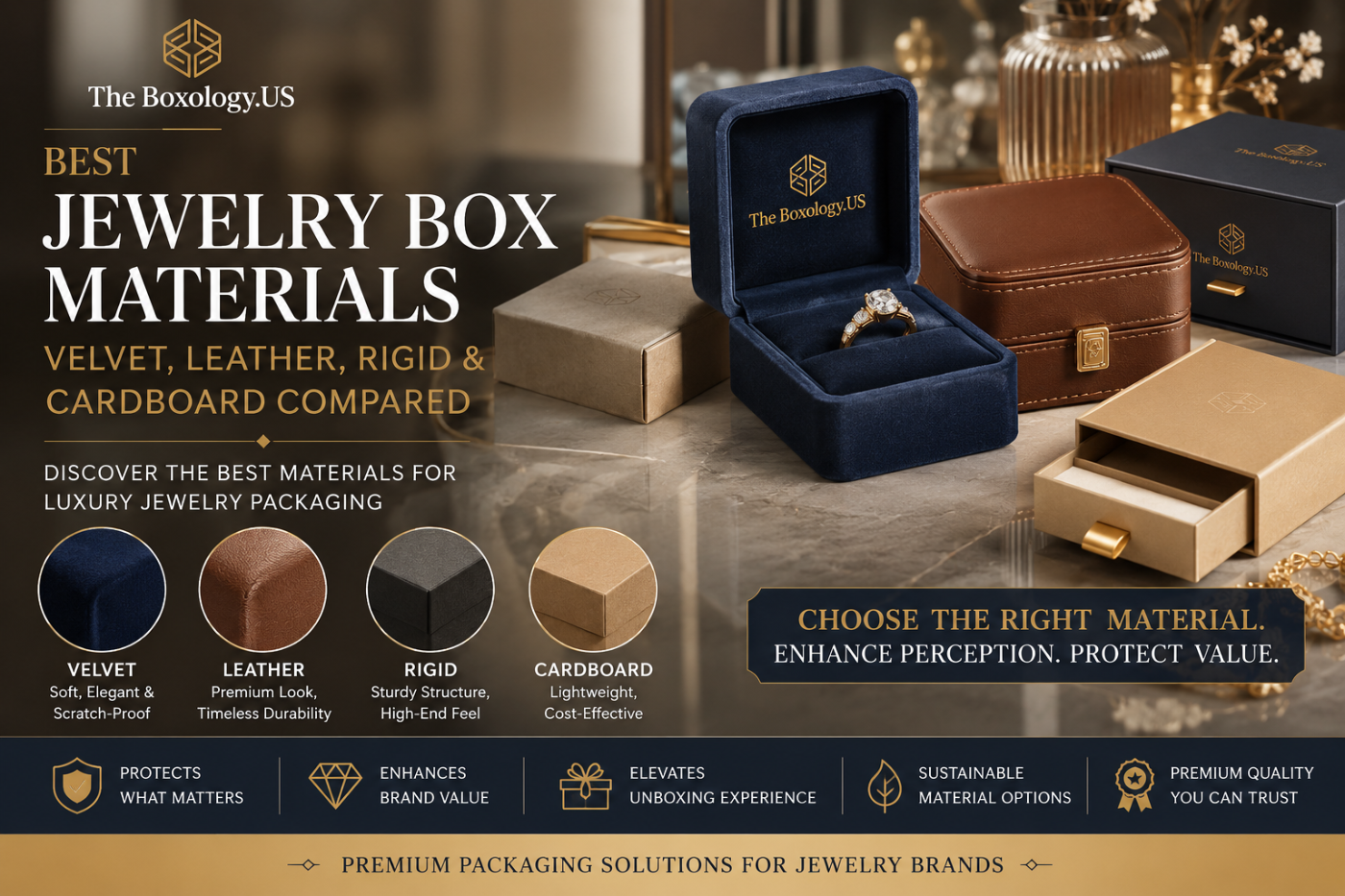
For premium custom jewelry boxes, rigid greyboard ranging between 1000 GSM and 1400 GSM remains one of the most reliable options for balancing durability and presentation. Combined with 157 GSM coated art paper, soft-touch lamination, or textured specialty papers, manufacturers can achieve both premium shelf appeal and dependable structural strength.
What procurement managers often miscalculate during sourcing is that lightweight materials may reduce unit cost initially but frequently increase product damage during national shipping. The long-term cost of replacements, customer dissatisfaction, and damaged brand perception usually exceeds the short-term savings.
For brands shipping nationwide, sustainable packaging should always be evaluated alongside compression strength, insert protection, and shipping performance rather than environmental claims alone.
Vintage Design Returns with Modern Manufacturing Standards
Vintage packaging aesthetics are making a strong return, particularly within luxury jewelry brands seeking timeless presentation rather than short-lived design trends.
Unlike older production methods, today’s vintage-inspired jewelry boxes combine classic visual elements with advanced manufacturing precision. Foil stamping, blind embossing, debossed logos, antique color palettes, ribbon closures, and textured paper finishes can now be produced with exceptional consistency using automated finishing equipment.
The challenge is maintaining manufacturing efficiency while preserving premium detailing.
In large-scale production runs, intricate decorative elements require tighter print registration, accurate die-line alignment, and stricter quality inspections. Poor registration or inconsistent foil application becomes immediately visible on luxury packaging, making production expertise just as important as creative design.
When executed correctly, vintage-inspired packaging delivers a premium customer experience without sacrificing structural reliability or production scalability, making it one of the strongest jewelry box trends for 2026.
Smart Packaging Is Expanding Beyond QR Codes
Smart packaging is becoming a practical branding tool rather than a novelty. While QR codes remain common, leading jewelry brands are integrating digital features that improve customer engagement and post-purchase support.
Depending on the product line and budget, smart jewelry packaging may include:
- QR codes linking to jewelry care instructions
- NFC-enabled authentication for premium collections
- Digital warranty registration
- Product authenticity verification
- Personalized thank-you videos
- Loyalty program enrollment
- Product storytelling and sourcing information
For luxury brands, these features extend the customer experience beyond the unboxing moment while helping reduce counterfeit concerns and strengthen brand trust.
From a production standpoint, smart packaging should be planned during the artwork and dieline stage. Last-minute additions can increase setup costs, delay approvals, and create print alignment issues.
Structural Design Has Become a Competitive Advantage
An attractive jewelry box means little if it fails during shipping.
In my experience reviewing packaging performance after nationwide freight deliveries, structural failures rarely begin with the exterior finish. The primary issues are usually incorrect board thickness, weak corner construction, oversized cavities, or poorly engineered inserts that allow product movement.
A well-designed jewelry box should balance presentation with protection.
Manufacturers typically evaluate:
- Greyboard caliper based on product weight
- Insert material (EVA foam, velvet, cardboard or molded pulp)
- Compression resistance
- Corner strength
- Lid alignment
- Stacking performance
- Shipping efficiency
- Dimensional tolerances
Brands investing in custom jewelry packaging should prioritize structural engineering before selecting decorative. upgrades. Premium finishes create the first impression, but reliable construction protects that investment throughout shipping.
The Boxology’s Expert Insight
Factory Tip: One of the most common mistakes during custom jewelry box production is specifying oversized internal dimensions. Even an extra 3–5 mm of unused cavity space can allow jewelry to shift during transit, increasing the risk of scratches, damaged inserts, and customer returns. A precisely engineered insert not only improves protection but also reduces material waste and freight volume across large production runs.
Why Domestic Wholesale Manufacturing Matters
For growing brands, choosing a packaging supplier is about far more than comparing unit prices.
Domestic production offers greater visibility into quality control, faster communication, shorter lead times, and easier approval of structural prototypes before mass production begins.
Businesses ordering wholesale jewelry boxes from a U.S.-focused supplier often benefit from:
- Faster production scheduling
- Reduced shipping uncertainty
- Better print consistency
- Easier prototype revisions
- Lower risk of production errors
- Improved communication throughout manufacturing
- More predictable inventory planning
What procurement managers often overlook is the total landed cost rather than the factory price alone. Delays, freight fluctuations, import duties, and inconsistent quality frequently outweigh small savings achieved through low-cost overseas sourcing.
For businesses preparing seasonal launches or retail rollouts, dependable lead times often become a greater competitive advantage than marginal price reductions.
Comparison of Popular Jewelry Box Styles
| Jewelry Box Style | Setup Complexity | Structural Strength | Cost-Effectiveness |
| Two-Piece Rigid Box | Medium | Excellent | High |
| Magnetic Closure Box | High | Excellent | Medium |
| Drawer Style Box | High | Very Good | Medium |
| Folding Rigid Box | Medium | Good | High |
| Paperboard Folding Carton | Low | Moderate | Excellent |
| Shoulder Neck Rigid Box | High | Outstanding | Medium |
Each style serves a different business objective. Luxury retailers generally prioritize rigid construction and premium finishes, while subscription brands and e-commerce businesses often balance presentation with freight efficiency and storage optimization.
Choosing the Right Jewelry Box Trend for Your Brand
Not every trend is worth following.
The most successful packaging decisions are based on your product category, target audience, sales channel, and fulfillment model.
For example:
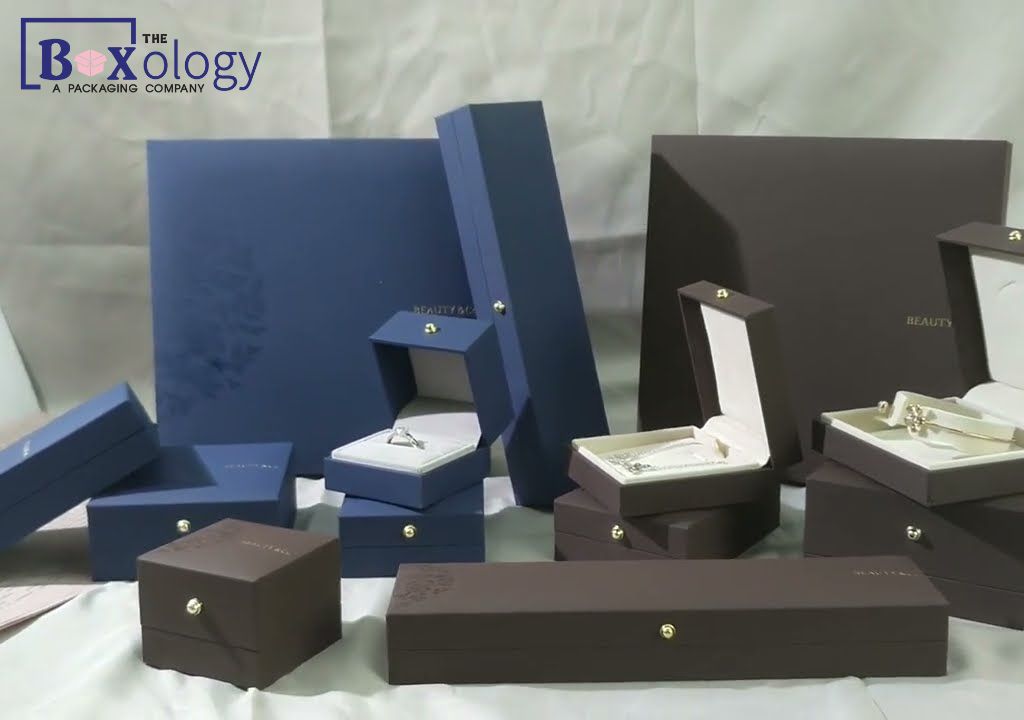
- Luxury jewelry collections often benefit from rigid boxes with velvet inserts, foil stamping, and magnetic closures.
- Many growing brands choose custom jewelry boxes with logo to create a consistent retail presentation across every product line.
- Eco-conscious brands may prioritize recycled materials, molded pulp inserts, and minimalist branding.
- E-commerce businesses usually require durable structures that withstand repeated handling during parcel delivery.
- Corporate gifting programs frequently prefer custom branding with premium presentation and scalable production.
Instead of selecting a design simply because it is trending, evaluate how it performs across manufacturing, shipping, retail presentation, and long-term brand consistency. The right packaging should support your operations just as effectively as it supports your marketing.
Final Thoughts
Jewelry box trends in 2026 are shaped by more than visual appeal. Retail brands, eCommerce businesses, and luxury manufacturers are investing in packaging that combines structural performance, sustainable materials, premium finishes, and memorable customer experiences.
The most effective packaging solutions are built around real business requirements not short-lived design trends. Material selection, insert engineering, dimensional accuracy, and production planning all play a direct role in product protection, shipping efficiency, and long-term brand perception.
As customer expectations continue to rise, packaging should be treated as a strategic investment that supports both operational efficiency and brand growth.
Ready to Upgrade Your Jewelry Packaging?
Whether you’re launching a new collection, redesigning your custom jewelry boxes, or sourcing wholesale custom jewelry boxes, choosing the right structure is just as important as selecting the right finish.
At The Boxology, our packaging specialists work with jewelry brands, retailers, and eCommerce businesses to develop custom packaging solutions that balance durability, presentation, and production efficiency.