Skip to content

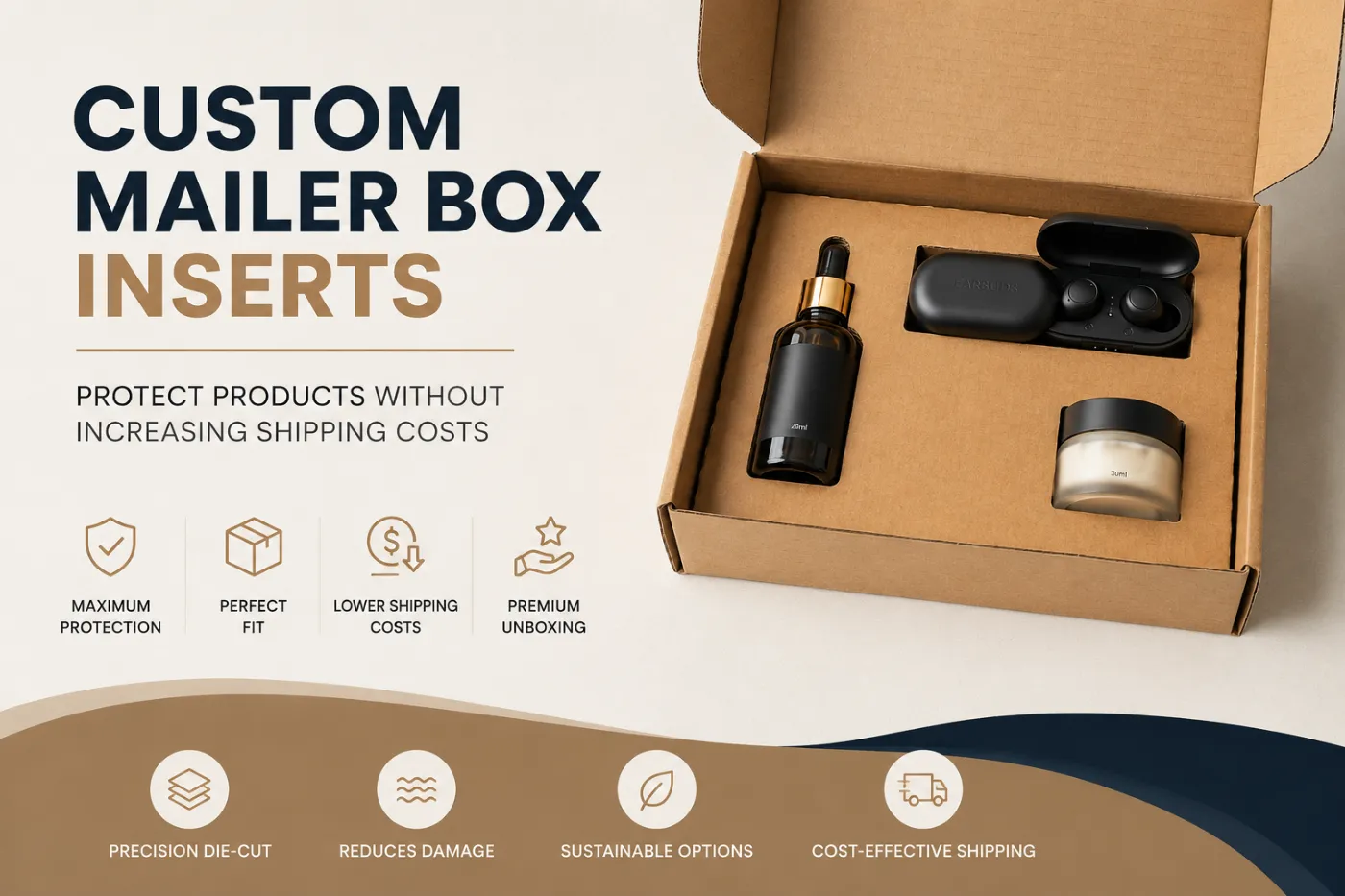

Custom mailer box inserts have become an essential component of modern packaging, particularly for e-commerce brands shipping fragile, premium, or high-value products. While businesses often focus on the exterior design of custom mailer boxes, the insert inside is what keeps products secure throughout transportation. A properly engineered insert minimizes movement, absorbs impact, and ensures customers receive products exactly as intended.
In my experience managing packaging projects for nationwide fulfillment operations, product damage is rarely caused by the outer box alone. The real issue is usually uncontrolled product movement inside the package. Even a durable corrugated mailer can fail to protect its contents if the product shifts during transit. A well-designed insert eliminates excess void space, improves product retention, and reduces the likelihood of returns caused by shipping damage.
For businesses balancing packaging performance with shipping costs, inserts offer another important advantage. When engineered correctly, they provide superior protection without requiring a larger box or significantly increasing package weight. This allows brands to improve customer satisfaction while keeping freight expenses under control.
Quick Answer
Do custom mailer box inserts protect products without increasing shipping costs?
Yes. Custom mailer box inserts are designed to hold products securely in place, reducing movement, shock, and vibration during shipping. By matching the insert to the product dimensions, businesses can improve protection without increasing box size or adding unnecessary weight. In many cases, well-designed inserts reduce replacement costs, lower return rates, and create a more professional unboxing experience.
Key Takeaways
- Custom inserts reduce product movement during shipping.
- Proper insert design minimizes breakage and customer returns.
- Lightweight insert materials help control shipping costs.
- Die-cut inserts improve packing speed and fulfillment efficiency.
- Premium inserts enhance the overall unboxing experience.
In This Guide
In this article, you’ll learn:
- Why custom mailer box inserts are important.
- The most common insert materials and their applications.
- How inserts reduce shipping damage without increasing freight costs.
- Which insert type is best for different products.
- Wholesale considerations for businesses ordering custom packaging.
- Expert recommendations for improving packaging performance.
Why Custom Mailer Box Inserts Matter

A custom insert stabilizes the product inside the package, preventing movement that commonly leads to damage during transportation.
Many businesses invest in premium custom printed mailer boxes but overlook the importance of internal product support. During shipping, packages are subjected to drops, vibrations, stacking pressure, and repeated handling. Without an insert, products can slide freely inside the box, increasing the risk of scratches, cracks, or complete product failure.
Packaging engineers evaluate insert performance based on factors such as:
- Product retention
- Shock absorption
- Compression resistance
- Assembly efficiency
- Material weight
- Pack-out speed
- Product presentation
Rather than filling empty space with excessive void fill, a precision-engineered insert secures the product exactly where it belongs. This approach improves both product protection and packing efficiency.
How Inserts Help Reduce Shipping Costs

Well-designed inserts reduce shipping costs by optimizing package dimensions, minimizing product damage, and improving packing efficiency.
At first glance, adding an insert may seem like an additional packaging expense. However, businesses often save considerably more by reducing damaged shipments and replacement orders.
Properly designed inserts help by:
- Preventing costly product returns
- Reducing replacement shipments
- Limiting excess void fill materials
- Supporting smaller, more efficient box sizes
- Improving fulfillment speed
- Lowering overall packaging waste
What procurement managers often overlook is that a damaged shipment costs far more than the insert itself. The combined expense of reverse logistics, replacement inventory, customer service, and lost brand trust usually exceeds the small investment required for engineered internal packaging.Reducing package dimensions can also help lower dimensional weight charges used by major shipping carriers. Reducing package dimensions can also help lower dimensional weight charges used by major shipping carriers.
Types of Custom Mailer Box Inserts

The ideal insert depends on the product’s weight, fragility, presentation requirements, and shipping environment.
There is no universal insert suitable for every product. The most effective solution is determined by how the product will be stored, transported, and presented to the customer.
The most commonly used insert materials include:
- Corrugated inserts
- Paperboard inserts
- Foam inserts
- EVA foam
- Molded pulp inserts
- Cardboard partitions
Each option offers a different balance of structural support, sustainability, production cost, and customer experience.
Corrugated Inserts
Corrugated inserts provide excellent structural support while remaining lightweight and cost-effective.
Manufactured from the same material commonly used in mailer box materials, corrugated inserts are one of the most popular choices for e-commerce packaging because they combine durability with affordability.
They are ideal for:
- Electronics
- Glass products
- Subscription boxes
- Cosmetics
- Health and wellness products
- Consumer goods
Corrugated inserts can also be die-cut into custom shapes that hold products securely without adding excessive weight. Their lightweight construction helps businesses maintain shipping efficiency while providing dependable protection during transit. Businesses evaluating corrugated packaging performance should also consider standardized box testing methods recommended by ASTM International.
Paperboard Inserts
Paperboard inserts are an excellent choice for lightweight products that require organization, presentation, and moderate protection without adding unnecessary packaging weight.
Paperboard inserts are commonly manufactured from folding carton board or solid bleached sulfate (SBS) board and are widely used for retail-ready packaging. They can be precision die-cut to securely position products while maintaining a clean and professional appearance.
They are frequently used for:
- Skincare products
- Cosmetics
- Small electronics
- Promotional kits
- Stationery
- Corporate gift sets
Compared with foam, paperboard inserts are easier to recycle and typically offer lower production costs for high-volume packaging programs.
For brands already using kraft mailer boxes, paperboard inserts also provide a consistent sustainable packaging solution that aligns with environmentally conscious branding.
Foam Inserts
Foam inserts provide superior cushioning for fragile, premium, and high-value products that require maximum impact protection during shipping.
Foam remains one of the most effective packaging materials for absorbing shock and vibration throughout the distribution process.
Popular foam options include:
- Polyethylene (PE) Foam
- Polyurethane (PU) Foam
- Cross-linked Foam
- EVA Foam
Foam inserts are commonly selected for:
- Electronics
- Medical devices
- Glass bottles
- Luxury watches
- Camera equipment
- Premium gift products
When analyzing shipping failures across long-distance freight routes, insufficient internal cushioning is often the primary cause of product damage rather than failure of the outer shipping box itself.
Although foam costs more than paper-based alternatives, it significantly reduces breakage for delicate products.
EVA Foam Inserts
EVA foam combines premium presentation with excellent shock absorption, making it one of the preferred materials for luxury packaging.
Unlike standard foam, EVA provides:
- Higher durability
- Smooth surface finish
- Precise die-cutting
- Better product presentation
- Longer service life
It is widely used inside:
- Luxury electronics
- Jewelry packaging
- Perfume gift sets
- Executive presentation boxes
- Promotional product kits
For premium brands, EVA foam doesn’t simply protect the product it enhances the overall unboxing experience by presenting each item in a precisely engineered compartment.
Molded Pulp Inserts
Molded pulp inserts offer environmentally responsible product protection while maintaining excellent structural support.
Manufactured from recycled paper fibers, molded pulp has become increasingly popular among brands seeking plastic-free packaging solutions.
Advantages include:
- Recyclable
- Biodegradable
- Lightweight
- Good shock absorption
- Sustainable production
Common applications include:
- Consumer electronics
- Home goods
- Glass containers
- Food products
- Eco-conscious subscription boxes
Businesses looking to reduce their environmental footprint often combine molded pulp inserts with custom mailer boxes manufactured from recyclable corrugated board to create a fully sustainable packaging solution. (FSC)
Domestic US Wholesale Advantages
Working with a domestic packaging manufacturer improves production consistency, communication, and lead times for custom inserts.
Businesses sourcing custom mailer box inserts within the United States typically benefit from:
Faster Production
Domestic manufacturing reduces delays associated with overseas freight and customs processing.
Better Quality Control
Insert dimensions, die-cut accuracy, and material consistency can be inspected throughout production rather than only after delivery.
Reduced Freight Costs
Flat-packed inserts and optimized packaging layouts often improve shipping efficiency for wholesale orders.
Flexible MOQ Options
Many domestic manufacturers offer production quantities suitable for both growing businesses and established national brands.
In my experience managing wholesale packaging programs, early collaboration between packaging engineers and fulfillment teams results in inserts that improve assembly speed while reducing material waste across the production line.
The Boxology’s Expert Insight
One of the biggest mistakes businesses make is designing the insert after finalizing the outer box. Professional packaging engineers develop the insert and box together to ensure precise product retention, efficient assembly, and minimal unused space. Even reducing internal clearance by a few millimeters can significantly improve product stability, lower the amount of cushioning material required, and reduce shipping-related damage during nationwide distribution.
Comparison of Custom Mailer Box Insert Materials

| Insert Material | Protection Level | Weight | Cost Efficiency | Sustainability | Best For |
| Corrugated Inserts | ★★★★☆ | Lightweight | ★★★★★ | ★★★★★ | E-commerce, cosmetics, subscription boxes |
| Paperboard Inserts | ★★★☆☆ | Very Lightweight | ★★★★★ | ★★★★★ | Retail products, promotional kits |
| PE/PU Foam | ★★★★★ | Medium | ★★★☆☆ | ★★☆☆☆ | Fragile electronics, glass products |
| EVA Foam | ★★★★★ | Medium | ★★☆☆☆ | ★★☆☆☆ | Luxury products, executive packaging |
| Molded Pulp | ★★★★☆ | Lightweight | ★★★★☆ | ★★★★★ | Sustainable consumer packaging |
Choosing the Right Insert Material
Selecting the right insert isn’t simply about protection. Businesses should evaluate:
- Product weight
- Product fragility
- Shipping distance
- Unboxing experience
- Sustainability goals
- Assembly time
- Production budget
- Long-term packaging costs
The most effective insert is the one that balances product security, operational efficiency, and customer presentation without increasing unnecessary shipping expenses.
How to Choose the Right Custom Mailer Box Insert
The right insert should secure the product, fit the box precisely, support efficient packing, and provide adequate protection without adding unnecessary weight or increasing shipping costs.
Many businesses select insert materials based only on price. In reality, the best insert is determined by how the product will move through the supply chain from the packing station to the customer’s doorstep.
Before approving an insert design, evaluate these factors:
- Product dimensions
- Product weight
- Fragility
- Shipping distance
- Retail presentation
- Assembly efficiency
- Sustainability goals
- Budget
A properly engineered insert should immobilize the product while keeping the overall package as compact and lightweight as possible.
Match the Insert to Your Product
Different products require different levels of internal protection.
For example:
- Skincare bottles typically perform well with precision die-cut paperboard inserts.
- Electronics benefit from corrugated or foam inserts that absorb repeated impacts.
- Premium perfume gift sets often use EVA foam to enhance both presentation and product security.
- Subscription boxes frequently rely on corrugated inserts because they provide durability while remaining lightweight.
- Eco-conscious brands increasingly choose molded pulp inserts for sustainable packaging programs.
Selecting the insert based on the product not simply the lowest material cost reduces product damage and improves customer satisfaction.
Design the Box and Insert Together
One of the most common packaging mistakes is designing the outer box first and treating the insert as an afterthought.
Professional packaging engineers develop both components simultaneously.
This approach improves:
- Product retention
- Structural stability
- Packing speed
- Material efficiency
- Freight optimization
- Overall customer experience
In my experience managing custom packaging production, businesses that engineer the custom mailer boxes and inserts together experience fewer shipping failures and more consistent production quality than those sourcing each component separately.
Common Mistakes Businesses Make
Even experienced procurement teams make avoidable mistakes when sourcing custom inserts.
Choosing Oversized Inserts
An insert that leaves excessive clearance allows products to shift during shipping, reducing its protective function.
Using More Protection Than Necessary
Heavy foam or multiple cushioning layers may increase packaging costs and shipping weight without delivering meaningful performance improvements.
Ignoring Fulfillment Efficiency
Complicated insert designs can slow packing operations and increase labor costs, particularly during high-volume fulfillment.
Focusing Only on Material Cost
The least expensive insert isn’t always the most economical solution.
Businesses should evaluate:
- Product damage rates
- Return costs
- Customer complaints
- Assembly time
- Material waste
- Replacement shipments
A slightly higher investment in a well-engineered insert often delivers substantial long-term savings.
Final Thoughts
Custom mailer box inserts do much more than keep products in place. They protect valuable merchandise, improve fulfillment efficiency, reduce shipping damage, and create a premium unboxing experience that reinforces customer confidence.
Whether you choose corrugated, paperboard, foam, EVA, or molded pulp, the most effective solution is one engineered specifically for your product and shipping environment. By optimizing insert dimensions, selecting appropriate materials, and integrating the insert into the overall package design, businesses can improve product protection without increasing shipping costs.
In today’s competitive e-commerce market, every shipment represents an opportunity to strengthen customer trust. Investing in properly engineered inserts helps reduce operational expenses while ensuring products arrive safely and professionally presented.

Protect Every Shipment with Custom Mailer Box Inserts
The right insert transforms a standard package into a secure, professional packaging solution. By combining precision-engineered inserts with custom mailer boxes, businesses can minimize shipping damage, streamline fulfillment, and deliver a premium unboxing experience without unnecessary shipping expenses.
At The Boxology, we design custom packaging systems tailored to your products, not generic stock solutions. From die-cut corrugated inserts to premium foam and sustainable molded pulp options, our team helps businesses create packaging that protects products, improves operational efficiency, and strengthens brand presentation.
Contact The Boxology today for a free structural consultation, insert prototype review, or custom packaging quote, and let our packaging specialists develop an insert solution engineered specifically for your products.