Skip to content

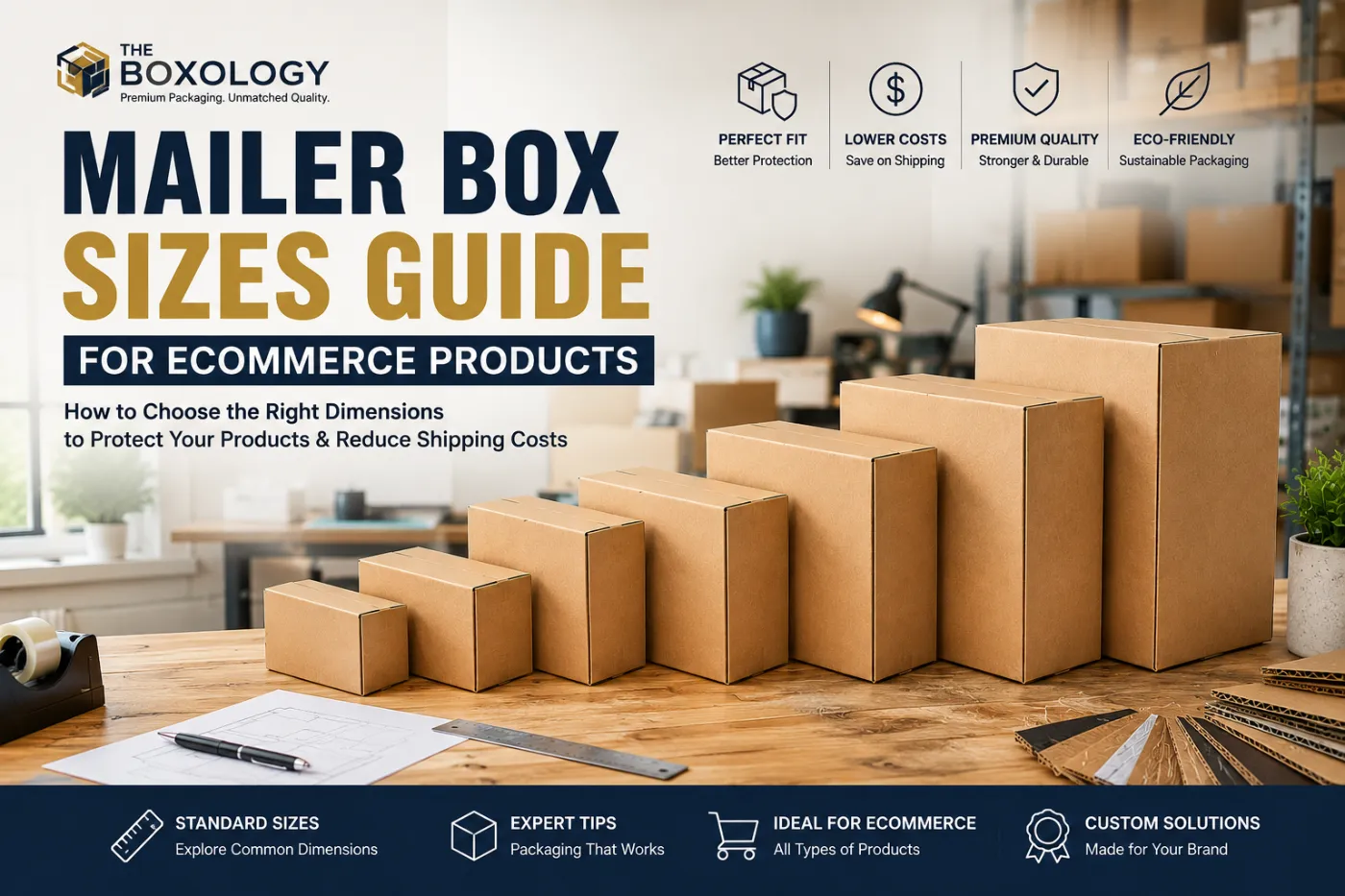



Choosing the right mailer box sizes is one of the most overlooked decisions in ecommerce packaging. Many businesses focus on product design, branding, and printing but underestimate how box dimensions affect shipping costs, product protection, and customer experience.
A mailer box that is too large increases dimensional shipping charges, requires more void fill, and allows products to move during transit. On the other hand, a box that is too small can crush products, damage packaging, or create a poor unboxing experience. Finding the right balance helps businesses protect products while controlling fulfillment costs.
After working with ecommerce brands across industries including cosmetics, apparel, electronics, subscription boxes, and luxury retail we’ve found that selecting the proper box dimensions often saves more money than switching to cheaper packaging materials. Correct sizing improves warehouse efficiency, reduces material waste, and creates a cleaner, more professional presentation.
This guide explains how to measure mailer boxes correctly, explores standard ecommerce box sizes, and shares practical recommendations to help you choose the best dimensions for your products. Businesses investing in mailer boxes should choose dimensions that balance product protection, shipping efficiency, and customer experience.

Quick Answer
What size mailer box should you use for ecommerce products?
The ideal mailer box size depends on your product dimensions, weight, protective inserts, and shipping method. Your box should provide enough space to protect the product without leaving excessive empty space. Choosing the correct dimensions reduces shipping costs, minimizes product movement, and creates a better customer experience.
Key Takeaways
- Choose a box slightly larger than the product.
- Leave room for protective inserts or tissue paper.
- Avoid oversized boxes that increase dimensional shipping charges.
- Consider carrier shipping requirements before selecting dimensions.
- Different products require different box sizes rather than a one-size-fits-all solution.
In This Guide
In this article, you’ll learn:
- Why mailer box size matters.
- Standard mailer box sizes used in ecommerce.
- How to measure a mailer box correctly.
- Recommended box sizes for different industries.
- Common sizing mistakes businesses make.
- Expert packaging tips for reducing shipping costs.
Why Mailer Box Size Matters
Selecting the right mailer box size affects much more than product fit. It influences shipping expenses, warehouse storage, packaging efficiency, customer satisfaction, and even your environmental impact.
Oversized boxes require additional filler materials, occupy more storage space, and often increase carrier charges due to dimensional weight pricing. Smaller boxes may reduce freight costs, but they can also place excessive pressure on products, increasing the risk of damage during transportation. Many brands choose custom mailer boxes because they eliminate unnecessary empty space and create a better fit for individual products.
From a packaging engineering perspective, the goal is to design packaging that protects the product while using the minimum amount of material necessary. This balance improves operational efficiency without sacrificing product safety.
The right box size also contributes to a better unboxing experience. Customers immediately notice when a product arrives neatly packed inside a well-fitted mailer box instead of shifting around inside oversized packaging.
Following the UPS packaging guidelines can also help businesses reduce shipping damage by selecting appropriately sized boxes and protective materials.
Standard Mailer Box Sizes Explained

There is no universal mailer box size suitable for every ecommerce business. Instead, packaging manufacturers produce a range of standard dimensions designed for different product categories. Businesses that ship products regularly often choose wholesale custom mailer boxes to maintain consistent sizing while reducing packaging costs.
Some of the most commonly used sizes include:
| Mailer Box Size | Common Applications |
| 6 × 6 × 2 in | Jewelry, accessories, small cosmetics |
| 8 × 6 × 3 in | Skincare products, candles, beauty kits |
| 9 × 6 × 3 in | Apparel accessories, stationery |
| 10 × 8 × 4 in | Clothing, books, electronics |
| 12 × 9 × 4 in | Subscription boxes |
| 14 × 10 × 4 in | Shoes, premium gift sets |
| 16 × 12 × 5 in | Large apparel orders, multiple products |
While these dimensions are widely used, custom-sized mailer boxes often provide better product protection and reduce unnecessary shipping costs. Besides choosing the correct dimensions, understanding different mailer box materials is equally important for product protection and shipping performance.
How to Measure a Mailer Box Correctly

One of the most common packaging mistakes is measuring a box incorrectly. Packaging manufacturers follow a standard sequence when recording box dimensions:
Length × Width × Height (L × W × H)
- Length – The longest side of the box opening.
- Width – The shorter side of the opening.
- Height (Depth) – The distance from the bottom of the box to the top when closed.
Always measure the inside dimensions rather than the outside dimensions. Internal measurements determine whether your product fits properly and whether there is enough space for inserts, tissue paper, or protective cushioning. If your products require additional protection, consider using custom mailer box inserts to keep items secure and improve the unboxing experience.
Packaging Engineer’s Tip
When measuring products, don’t forget to account for:
- Foam inserts.
- Tissue paper.
- Protective sleeves.
- Instruction manuals.
- Thank-you cards.
- Promotional materials.
Ignoring these components often results in ordering boxes that are slightly too small.
Choosing the Right Mailer Box Size for Different Ecommerce Products

Every ecommerce product has different packaging requirements. A jewelry brand, for example, doesn’t need the same box dimensions as an apparel retailer or an electronics manufacturer. Selecting the correct mailer box size based on the product itself helps reduce shipping costs, improve protection, and create a better unboxing experience. Durable corrugated mailer boxes provide excellent protection for products that require extra strength during shipping.
Below are some general recommendations used throughout the packaging industry.
Jewelry & Small Accessories
Small products like rings, necklaces, bracelets, sunglasses, and watches require compact mailer boxes that keep the product secure without leaving unnecessary empty space.
Recommended Size
6 × 6 × 2 in
Recommended Board
- E Flute
- Premium rigid insert (if required)
Why It Works
Compact dimensions reduce shipping costs while presenting luxury products in a clean, organized package. Foam or velvet inserts can be added without making the box oversized.
Cosmetics & Skincare Products
Cosmetic products often include multiple items such as creams, serums, lotions, or makeup kits. These products need enough space for inserts while preventing bottles from shifting during transit.
Recommended Size
8 × 6 × 3 in
Recommended Board
- E Flute
- B Flute
Best For
- Skincare kits
- Makeup products
- Perfume gift sets
- Beauty subscription boxes
Premium skincare brands often choose white mailer boxes to create a clean and professional unboxing experience.
Apparel & Fashion Products
Folded clothing generally requires wider boxes rather than deeper ones. The objective is to minimize wrinkles while keeping packaging lightweight.
Recommended Size
10 × 8 × 4 in
Recommended Board
- B Flute
Best For
- T-shirts
- Hoodies
- Baby clothing
- Fashion accessories
Electronics
Electronic devices require additional protection because they are more susceptible to damage from impacts during shipping.
Recommended Size
12 × 10 × 4 in
Recommended Board
- B Flute
- C Flute (for heavier items)
Additional Protection
- EVA foam inserts
- Paper cushioning
- Molded pulp inserts
Subscription Boxes
Subscription businesses usually ship multiple products in one package. Box dimensions should allow enough room for protective materials while maintaining an attractive presentation.
Recommended Size
12 × 9 × 4 in
Recommended Board
- B Flute
Common Uses
- Monthly beauty boxes
- Coffee subscriptions
- Snack boxes
- Lifestyle products
If you’re unsure whether a box is the right packaging solution, compare mailer boxes vs shipping envelopes before selecting packaging for your products.
Mailer Box Size Chart
| Product Type | Recommended Size | Suggested Board |
| Jewelry | 6 × 6 × 2 in | E Flute |
| Cosmetics | 8 × 6 × 3 in | E / B Flute |
| Apparel | 10 × 8 × 4 in | B Flute |
| Electronics | 12 × 10 × 4 in | B / C Flute |
| Subscription Boxes | 12 × 9 × 4 in | B Flute |
| Shoes | 14 × 10 × 4 in | B Flute |
| Multiple Products | Custom Size | Based on Product Weight |
Expert Tip: These dimensions are starting points. Custom-sized mailer boxes often provide better protection and reduce material waste compared to using standard stock sizes.
Common Mailer Box Size Mistakes
Even experienced ecommerce businesses sometimes choose the wrong box dimensions. These mistakes increase fulfillment costs, damage products, and negatively affect customer satisfaction.
Choosing Oversized Boxes

One of the most common mistakes is selecting a box that’s significantly larger than the product.
Oversized packaging:
- Increases dimensional shipping charges.
- Requires more filler materials.
- Allows products to shift during transport.
- Creates unnecessary packaging waste.
Best Practice
Choose a box that closely fits the product while leaving enough room for protective inserts.
Ignoring Protective Inserts
Some businesses focus only on external dimensions and forget to account for foam inserts, tissue paper, dividers, or molded pulp.
This often results in products fitting too tightly or not fitting at all.
Best Practice
Measure the product together with all internal packaging components before selecting box dimensions.
Using One Box Size for Every Product
Using a single box size for all products may simplify inventory management, but it rarely produces the best packaging results.
Different products require different levels of protection and different internal space.
Best Practice
Develop multiple standard box sizes based on your product range instead of relying on one universal size.
Forgetting Dimensional Weight Pricing
Most shipping carriers calculate shipping charges using either actual weight or dimensional weight, whichever is greater. Large lightweight boxes often cost more to ship than businesses expect. Most major shipping carriers calculate postage using dimensional weight, so reviewing the latest USPS dimensional weight guidelines can help you choose more cost-effective packaging.
Best Practice
Optimize box dimensions to reduce dimensional weight while maintaining sufficient product protection.
Selecting Size Before Product Testing
Many companies order thousands of boxes before physically testing their products inside the packaging.
Small measurement errors can become expensive once production begins.
Best Practice
Always test prototype boxes with the actual product before approving large production runs.
Packaging Engineer’s Tips for Selecting Mailer Box Sizes

After designing mailer boxes for ecommerce brands across multiple industries, one lesson consistently stands out: the best packaging is rarely the largest or the strongest it is the one that fits the product correctly.
Before finalizing a box size, evaluate:
- Product dimensions.
- Product weight.
- Shipping distance.
- Carrier handling conditions.
- Protective inserts.
- Unboxing presentation.
- Warehouse storage requirements.
- Future product variations.
Eco-conscious businesses frequently select kraft mailer boxes because they combine durability with a natural, sustainable appearance.
A Properly sized mailer boxes also create a more professional customer experience, reduces shipping costs, improves customer satisfaction, and creates a more efficient packaging process from manufacturing to final delivery. Businesses shipping fragile products should also review the FedEx packaging recommendations before selecting box dimensions and protective materials.
Final Thoughts

Selecting the right mailer box size is about more than simply finding a box that fits your product. The correct dimensions improve product protection, reduce shipping costs, optimize warehouse storage, and create a premium unboxing experience that reflects your brand.
Investing in professionally engineered custom boxes helps businesses improve packaging performance while maintaining consistent brand presentation.
Whether you’re shipping cosmetics, apparel, electronics, subscription boxes, or luxury products, choosing the right size ensures your packaging performs efficiently throughout the supply chain. By considering product dimensions, protective inserts, carrier requirements, and dimensional weight pricing, businesses can avoid unnecessary expenses while delivering products safely to customers. If sustainability is part of your brand strategy, consider packaging made from FSC-certified paper sourced from responsibly managed forests.
Investing in properly engineered mailer boxes today helps reduce packaging waste, minimize shipping damage, and improve customer satisfaction over the long term. As order volumes increase, investing in bulk wholesale mailer boxes can help businesses lower packaging costs and streamline fulfillment operations.
Build Custom Mailer Boxes That Fit Your Products Perfectly
Choosing the correct box dimensions helps reduce shipping costs while improving operational efficiency. Material selection, flute type, structural design, printing quality, and custom inserts all play an important role in protecting products and enhancing the customer experience.
At The Boxology, we manufacture custom mailer boxes in virtually any size, style, and finish to match your products and branding requirements. Whether you need ecommerce mailer boxes, subscription packaging, luxury retail boxes, or fully customized shipping solutions, our packaging specialists can help you design packaging that balances protection, presentation, and shipping efficiency.