Skip to content

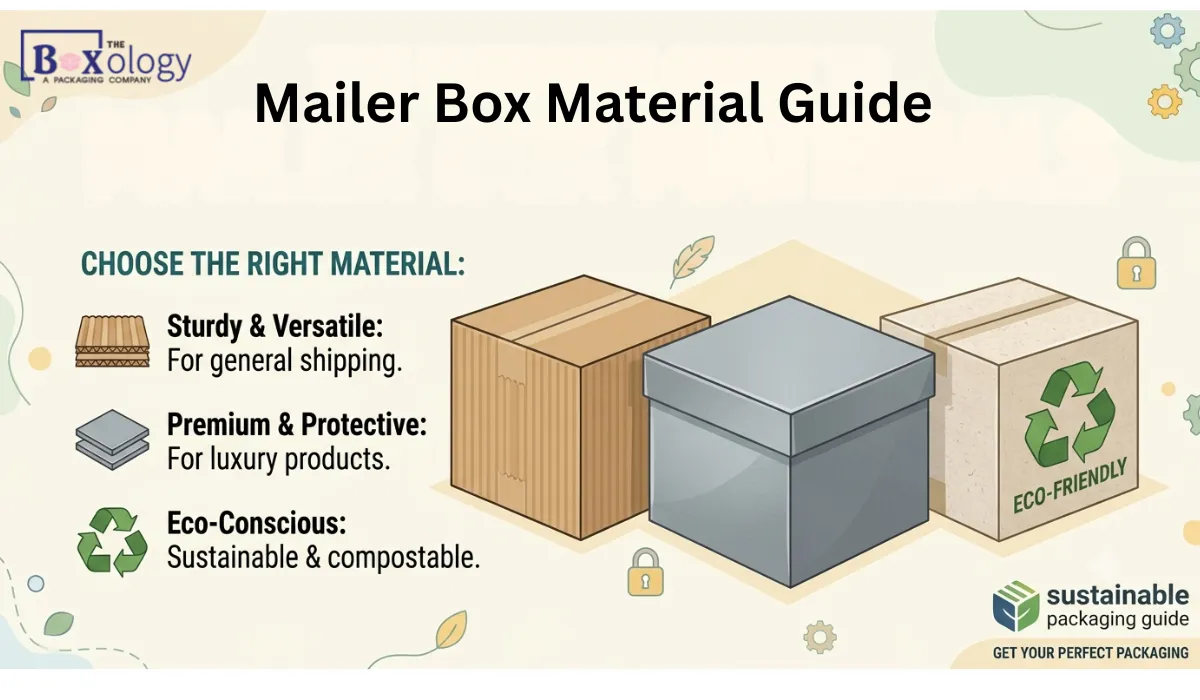






Mailer box materials play a critical role in determining how well a package protects products, controls shipping costs, and represents a brand. Choosing between corrugated, kraft, and cardboard isn’t simply a design decision it directly affects structural performance, customer experience, and long-term packaging efficiency.
In my experience managing high-volume packaging production, one of the most common sourcing mistakes is selecting a material based solely on price. A lower-cost board may reduce manufacturing expenses initially, but if it cannot withstand stacking pressure, compression during transit, or repeated warehouse handling, the total cost of damaged products quickly outweighs the savings. The right material should balance structural strength, print quality, sustainability, and freight efficiency based on the product being shipped.
Quick Answer
What is the best material for mailer boxes?
There isn’t a single material that works for every business. Corrugated board is the preferred choice for products requiring maximum shipping protection, kraft paperboard is ideal for brands prioritizing sustainability and a natural appearance, while premium cardboard offers superior print quality for lightweight retail products. The best material depends on product weight, shipping distance, branding goals, and budget.
In This Guide
In this article, you’ll learn:
- The differences between corrugated, kraft, and cardboard mailer boxes.
- Which material offers the best protection during shipping.
- How material choice affects branding and print quality.
- Cost considerations for wholesale packaging.
- Expert recommendations for selecting the right material for different products.
Why Mailer Box Material Matters
The material determines how well a mailer box protects products, performs during shipping, and represents your brand.
A mailer box experiences far more stress than many businesses realize. From automated packing lines and warehouse storage to carrier handling and last-mile delivery, every shipment exposes packaging to compression, vibration, and impact.
When selecting materials, packaging engineers typically evaluate factors such as:
- Product weight
- Shipping distance
- Compression requirements
- Moisture exposure
- Print quality expectations
- Warehouse stacking conditions
- Customer unboxing experience
Ignoring these factors often results in crushed corners, damaged products, or inconsistent customer experiences.
For businesses shipping nationwide, selecting the appropriate board construction is just as important as choosing the correct box dimensions.
Corrugated Board: The Industry Standard for Shipping Protection
corrugated mailer boxes is the most widely used mailer box material because it combines excellent structural strength with reliable shipping performance.
A corrugated board consists of a fluted medium bonded between linerboards. This engineered construction absorbs impact, increases compression strength, and helps protect products throughout transportation.
Unlike solid paperboard, corrugated material distributes pressure more effectively, making it suitable for e-commerce shipments and wholesale distribution.
Common Corrugated Flute Types
E-Flute
E-Flute offers a thinner profile while maintaining excellent print quality. It is commonly used for premium e-commerce packaging because it creates a clean appearance without adding unnecessary bulk.
Best for:
- Cosmetics
- Apparel
- Subscription boxes
- Promotional kits
- Consumer electronics accessories
B-Flute
B-Flute provides greater puncture resistance and stacking strength than E-Flute, making it a popular choice for heavier consumer products.
Best for:
- Health products
- Glass containers
- Food packaging
- Medium-weight retail items
C-Flute
C-Flute delivers superior cushioning and compression performance. It is frequently selected for larger or more fragile products requiring additional protection during long-distance shipping.
Best for:
- Fragile products
- Industrial components
- Multi-item shipments
- Wholesale distribution
In my experience evaluating transit-related packaging failures, incorrect flute selection causes more shipping issues than print quality or decorative finishes. Choosing the right flute profile based on product weight and shipping conditions significantly reduces damage rates while improving customer satisfaction.
Kraft Mailer Boxes: Sustainable Without Sacrificing Performance
Kraft paper is an excellent choice for brands seeking environmentally responsible packaging while maintaining reliable shipping performance.
Kraft mailer boxes have become increasingly popular among direct-to-consumer brands because they communicate authenticity, sustainability, and simplicity. However, many buyers assume kraft paper is automatically weaker than white-coated materials. In reality, the board construction and corrugated flute contribute far more to structural strength than the exterior paper color. (FSC)
For businesses focused on eco-conscious branding, kraft mailer boxes provide an ideal balance between durability and environmental responsibility.
Advantages of Kraft Mailer Boxes
- Natural premium appearance
- Excellent print compatibility
- Recyclable and biodegradable
- Strong tear resistance
- Cost-effective for wholesale production
Kraft materials are commonly selected by:
- Organic food brands
- Handmade product businesses
- Subscription box companies
- Cosmetic brands
- Coffee and tea companies
When combined with high-quality corrugated board, kraft packaging delivers dependable protection without sacrificing visual appeal.
Cardboard Mailer Boxes: Best for Lightweight Retail Products
Cardboard mailer box offers excellent print quality and presentation but is generally better suited for lightweight products than heavy shipping applications.
Solid paperboard (commonly referred to as cardboard) creates clean folds, crisp edges, and vibrant printed graphics. It performs exceptionally well for retail packaging where presentation is the primary objective.
Because it lacks the fluted structure found in corrugated board, cardboard provides less cushioning during transportation.
It is best suited for:
- Greeting cards
- Gift cards
- Stationery
- Small promotional products
- Lightweight cosmetics
- Retail shelf packaging
For businesses shipping fragile or heavy products nationwide, cardboard is often paired with an outer corrugated mailer to improve protection.
Corrugated vs Kraft vs Cardboard
Each material serves a different purpose.
Selecting the right option depends on product weight, shipping method, customer expectations, and branding objectives rather than simply choosing the strongest material available.
| Material | Structural Strength | Print Quality | Sustainability | Best For |
| Corrugated Board | Excellent | Very Good | Excellent | E-commerce, shipping, subscription boxes |
| Kraft Corrugated | Excellent | Good | Excellent | Eco-friendly brands, wholesale packaging |
| Solid Cardboard | Moderate | Excellent | Good | Retail displays, lightweight products |
In my experience, businesses rarely regret investing in stronger materials. They are far more likely to regret selecting packaging that cannot adequately protect the product during shipping.
How Material Choice Impacts Shipping Costs
Choosing the correct material improves protection while helping businesses control freight expenses.
Many procurement teams assume thicker packaging always provides better value. In practice, excessive board thickness can increase dimensional weight, pallet utilization, and transportation costs without delivering proportional protection.
Packaging engineers typically evaluate:
Product Weight
Heavy products require stronger board grades and higher compression resistance.
Shipping Distance
Long-distance deliveries expose packaging to repeated handling and stacking pressure, making stronger corrugated materials the safer option.
Warehouse Storage
Boxes stored for extended periods must maintain structural integrity under stacked loads without collapsing.
Dimensional Weight
Larger boxes increase shipping costs even when the product itself is relatively light. Optimizing material selection alongside box dimensions helps reduce unnecessary freight charges.
One of the most effective cost-saving strategies is selecting the minimum board specification that still meets shipping performance requirements. This approach reduces material consumption while maintaining product protection.
The Boxology’s Expert Insight
Board grade is often more important than board thickness.
Many buyers request thicker packaging believing it automatically improves durability. In reality, compression strength depends on the overall board construction, flute profile, liner quality, and product distribution inside the box. Before increasing material thickness, conduct compression and transit testing using actual product weights. This engineering-first approach frequently delivers better shipping performance while reducing overall packaging costs.
Wholesale Material Considerations
Wholesale buyers should evaluate manufacturing consistency, board specifications, quality control, and long-term supply reliability instead of comparing prices alone.
When sourcing mailer boxes at scale, material consistency directly affects production efficiency and customer satisfaction.
Before approving a supplier, verify:
Board Specifications
Confirm:
- Flute type
- Board grade
- Caliper consistency
- Paper weight
- Burst strength
- Edge Crush Test (ECT) rating
Manufacturing Consistency
Reliable manufacturers maintain consistent board quality across every production batch, reducing variations that can affect assembly and shipping performance.
Minimum Order Quantities (MOQ)
Higher production volumes generally reduce per-unit costs by spreading setup and material expenses across larger runs.
Quality Control
Inspect every production batch for:
- Accurate die-cutting
- Consistent board thickness
- Print registration
- Adhesive quality
- Fold accuracy
- Structural integrity
Strong quality assurance minimizes defects before products reach customers and helps maintain long-term brand reputation.
How to Choose the Best Mailer Box Material for Your Business
Choose your mailer box material based on product weight, shipping conditions, branding goals, and long-term packaging costs rather than selecting the least expensive option.
Every business has different packaging requirements. A lightweight apparel brand shipping T-shirts nationwide requires a different board specification than a company distributing glass bottles or electronic accessories.
Before selecting a material, evaluate these key factors:
Product Protection
Your packaging should match the level of protection the product requires.
For example:
- Lightweight apparel performs well with E-Flute corrugated mailer boxes.
- Medium-weight consumer products often benefit from B-Flute construction.
- Fragile or heavy products typically require stronger corrugated board with higher compression resistance.
Selecting an oversized or under-engineered material can increase either shipping costs or product damage.
Brand Presentation
The material you choose also influences how customers perceive your brand.
White-coated corrugated board delivers vibrant graphics and premium print quality, making it ideal for branded e-commerce packaging. Kraft materials communicate sustainability and authenticity, while specialty paper wraps create a more luxurious appearance for premium product lines.
A strong first impression begins with the packaging before the customer even opens the box.
Shipping Environment
Products shipped across multiple distribution centers experience repeated handling, vibration, and compression.
What logistics teams often underestimate is that packaging performance depends on the entire shipping journey—not simply the distance traveled. Choosing the correct board specification helps reduce transit damage, replacement costs, and customer complaints.
Long-Term Cost Efficiency
The lowest unit price rarely represents the lowest total packaging cost.
When evaluating suppliers, calculate:
- Material performance
- Freight efficiency
- Product damage rates
- Return costs
- Warehouse storage
- Assembly speed
- Customer satisfaction
In many cases, investing slightly more in higher-quality board reduces operational costs over the life of the packaging program.
Final Thoughts
Selecting the right mailer box material is one of the most important decisions in any packaging project. Corrugated board, kraft paper, and solid cardboard each offer unique advantages, but the best choice depends on how the packaging will perform throughout production, shipping, storage, and customer delivery.
In my experience overseeing custom packaging projects for high-volume businesses, the most successful brands focus on total packaging performance rather than material cost alone. Board strength, flute profile, print quality, sustainability, and freight efficiency all contribute to a packaging solution that protects products while reinforcing brand value.
Whether you’re launching a new product, expanding your e-commerce business, or improving wholesale packaging operations, investing in the right mailer box material helps reduce damage, improve customer satisfaction, and support long-term growth.
Build Better Packaging with the Right Materials
Choosing the right mailer box material is about more than selecting corrugated, kraft, or cardboard. Every packaging decision affects product protection, shipping efficiency, customer satisfaction, and long-term operating costs.
If you’re planning a custom packaging project, The Boxology can help you select the most suitable board grade, flute profile, and structural design for your products. Our packaging specialists work with businesses across the United States to develop durable, high-quality mailer boxes engineered for both performance and brand presentation.