Skip to content


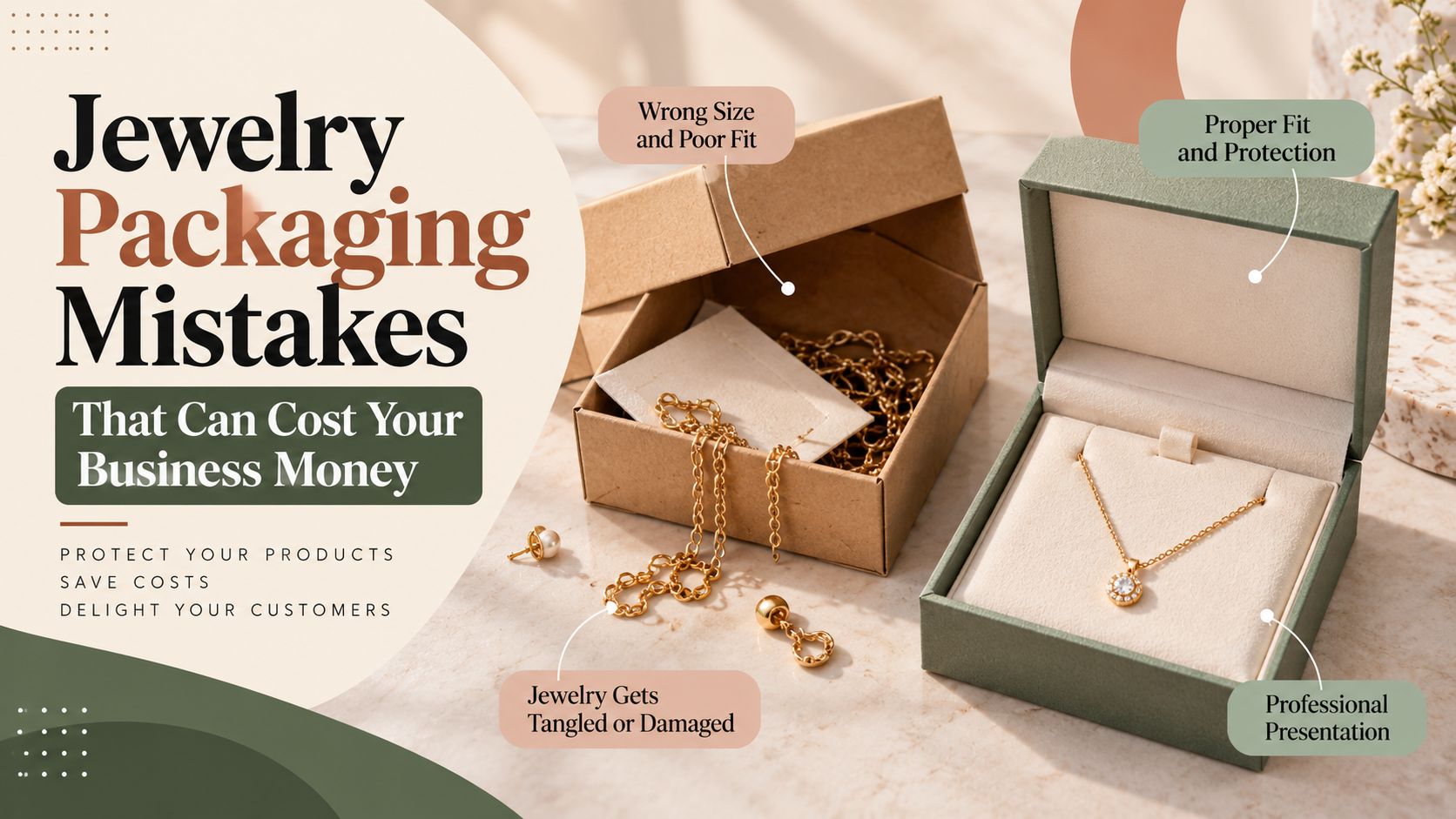




Jewelry packaging mistakes can cost your business more than the price of a box. Poor sizing, weak inserts, damaged products, and unexpected shipping expenses can turn an affordable packaging order into a costly problem.
For jewelry brands, packaging needs to protect products, fit the budget, and create a good customer experience. A beautiful box is not enough if it causes delays, increases shipping costs, or fails during delivery.
This guide covers 10 common jewelry packaging mistakes, explains their financial impact, and shows how to avoid them before placing your next order.
1. Choosing the Cheapest Jewelry Boxes Without Checking Quality
Low packaging prices can look attractive, especially for small businesses ordering their first custom boxes. However, the cheapest option is not always the most economical.
Thin materials, weak corners, loose lids, and poor-quality finishes may create problems during packing, storage, or delivery.
For example, a low-cost box that loses its shape can make an expensive necklace look poorly presented. If the packaging fails during shipping, the business may also face replacement costs.
How to avoid this mistake:
Compare packaging based on construction, product fit, and intended use—not just unit price.
A lightweight paperboard box may work well for affordable fashion jewelry, while a rigid box may be more suitable for premium rings or watches.
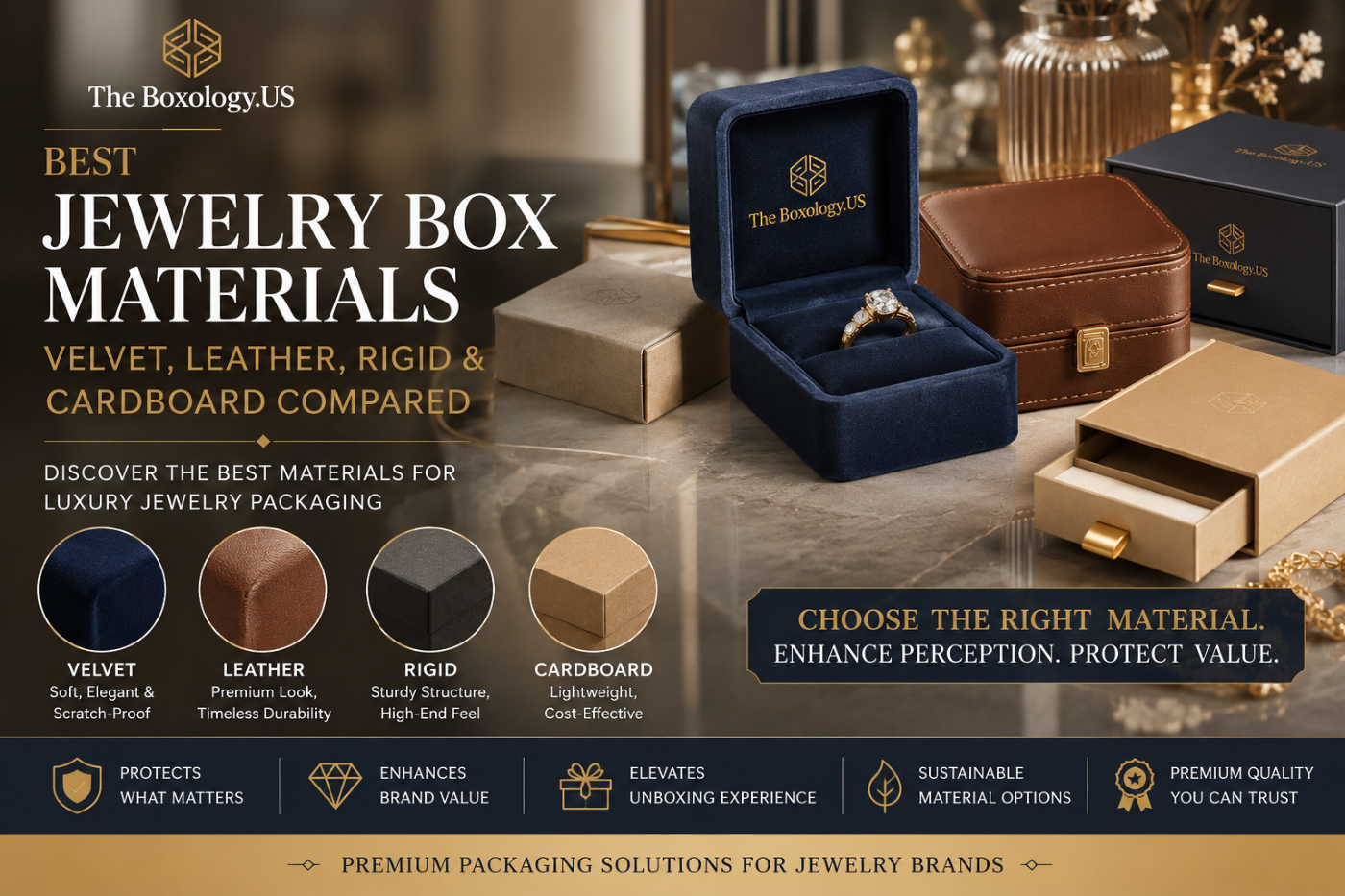
Before ordering, review the different jewelry box materials and choose a structure that matches your product.
2. Ordering Jewelry Boxes in the Wrong Size
An oversized jewelry box uses more material and occupies more space during shipping and storage.
A box that is too small can create a different problem. The jewelry may press against the lid, bend inside the packaging, or become difficult to remove.
Both situations can increase expenses.
Imagine ordering 500 necklace boxes before checking the finished insert dimensions. If the necklaces do not fit correctly, the business may need replacement inserts or an entirely new packaging order.
How to avoid this mistake:
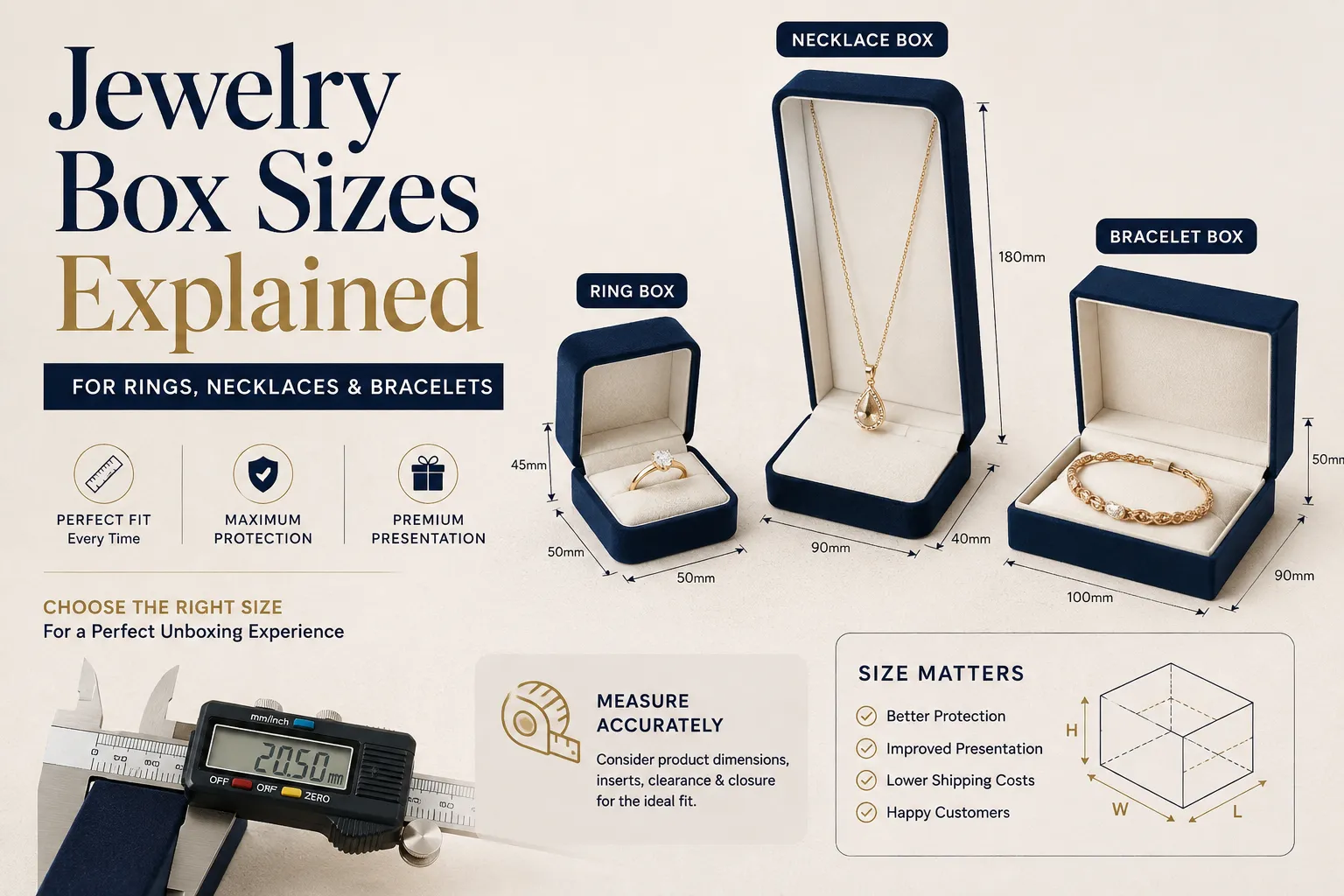
Measure the jewelry and all components that will go inside the box.
Check:
- Product length, width, and height
- Insert thickness and cavity depth
- Clearance between the jewelry and lid
- Space for cards, pouches, or accessories
Use our jewelry box sizes guide to understand the measurements that matter for rings, necklaces, and bracelets.
Always approve the final internal dimensions before production.
3. Using Inserts That Do Not Hold Jewelry Securely
A jewelry box can look perfect on the outside while failing to hold the product properly.
Loose rings may move inside their cavities. Necklace chains can become tangled, and earrings may separate from their display cards.
These problems can lead to additional packing work, customer complaints, or damaged merchandise.
How to avoid this mistake:
Choose inserts according to the shape, weight, and fragility of the jewelry.
A ring may need a fitted slot, while a necklace may require a shaped insert with separate points for securing the chain.
Do not assume one insert design will work for every product in your collection.
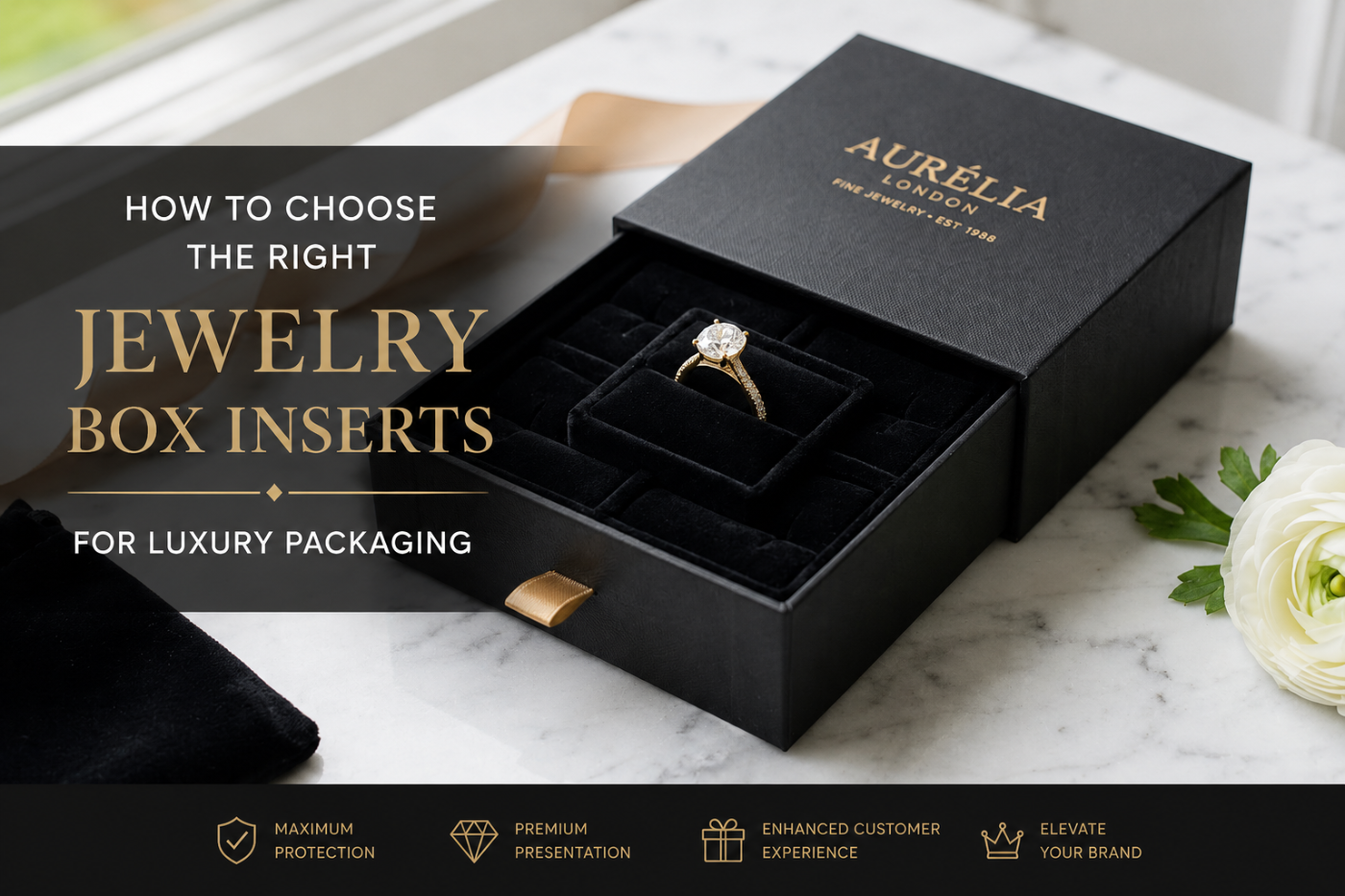
Our jewelry box inserts guide explains how different insert materials and structures support jewelry presentation and product retention.
Test the jewelry inside the finished insert before approving a bulk order.
4. Confusing Luxury Presentation Boxes With Shipping Protection
One of the most expensive jewelry shipping mistakes is assuming that a premium presentation box can safely travel through a delivery network by itself.
A rigid jewelry box may provide an attractive presentation, but it is not automatically a complete shipping package.
During delivery, parcels may experience drops, vibration, compression, and repeated handling.
A decorative box without suitable outer packaging can become scratched, dented, or damaged.
How to avoid this mistake:
Treat the presentation box and shipping box as two separate components.
Place the jewelry inside its fitted presentation box. Then use a suitable outer shipping carton with appropriate cushioning and limited empty space.
Test the complete packed parcel under conditions relevant to your shipping process.
This helps protect both the jewelry and the branded box customers expect to receive.
5. Adding Expensive Finishes Without Considering Their Value
Gold foil, embossing, specialty coatings, and magnetic closures can create an attractive presentation.
However, adding every available finishing option can increase packaging costs without improving the customer’s experience enough to justify the expense.
A business selling affordable everyday earrings may not need the same packaging features as a premium engagement ring brand.
How to avoid this mistake:
Start with the features customers will notice and use.
For example, a well-fitted box with a clean printed logo may provide a better overall experience than a heavily decorated box with a poor insert.
Compare the cost of each optional feature before finalizing the design.
Ask whether the finish supports your brand positioning, improves usability, or serves a clear presentation purpose.
If it does not, consider a simpler alternative.
6. Ignoring Storage and Shipping Costs
The unit price is only one part of the total jewelry packaging cost.
Large rigid boxes can occupy considerable warehouse space. Heavy packaging can also increase shipping weight, while oversized cartons may affect dimensional-weight charges.
According to UPS’s guide to package dimensions and weight, shipping charges may depend on the space a package occupies as well as its actual weight. Choosing appropriately sized packaging can help businesses avoid unnecessary shipping expenses.
These expenses become more noticeable as order volume grows.
For example, choosing a box much larger than the jewelry may increase both the storage space needed and the size of the shipping carton.
How to avoid this mistake:
Calculate the total packaging cost before placing an order.
| Cost Factor | Common Mistake | Better Approach |
| Box production | Comparing unit price only | Review the complete quote |
| Shipping | Choosing oversized boxes | Use suitable dimensions |
| Storage | Ignoring assembled box volume | Compare storage requirements |
| Inserts | Selecting an unsuitable design | Test product fit |
| Finishes | Adding unnecessary upgrades | Prioritize useful features |
| Replacements | Skipping quality checks | Approve samples before bulk orders |
The most affordable packaging solution is the one that balances purchase price, protection, fulfillment, and presentation.
7. Ordering in Bulk Before Testing a Sample
Bulk ordering may reduce the price per box, but it also increases the financial impact of a design mistake.
An incorrect logo position, unsuitable insert, or poorly fitting lid can affect hundreds of boxes instead of just one.
Once production is complete, fixing the problem may require additional time and money.
How to avoid this mistake:
Review the packaging design before approving a large order.
Check the dieline, printed artwork, internal dimensions, insert fit, and opening experience.
If physical samples are available, test them with the actual jewelry.
Also check how the box performs when packed for shipping.
Ask your packaging supplier about proofing and sampling options before confirming production.
8. Forgetting About the Packing Process
A packaging design may look impressive but take too long to assemble.
Complicated inserts, difficult closures, and unnecessary wrapping steps can increase fulfillment time.
For businesses packing many orders each day, even small delays can create additional labor costs.
How to avoid this mistake:
Test the complete packing process.
Measure how long it takes to prepare the box, place the jewelry, secure the insert, and close the package.
Make sure employees can pack products consistently without forcing items into position.
For high-volume orders, a simpler box with a well-designed insert may be more practical than an elaborate structure requiring several manual steps.
Packaging should work efficiently for your team as well as look attractive to customers.
9. Overlooking Artwork and Branding Errors
Printing mistakes can make otherwise functional packaging unusable.
Common problems include low-resolution logos, incorrect brand colors, spelling errors, and artwork placed too close to folds or edges.
These issues can lead to reprinting expenses or delays in product launches.
How to avoid this mistake:
Provide clear, print-ready artwork and confirm the printing specifications.
Check logo placement, typography, colors, and important design elements against the approved dieline.
Pay particular attention to areas affected by folds, corners, closures, or decorative finishes.
Before approving production, have someone who did not create the artwork review the final proof.
A simple second review can catch errors that are easy to miss during design.
10. Not Planning for Future Product Collections
Some jewelry businesses order packaging only for their current products without considering upcoming collections.
When a new ring, necklace, or bracelet size is introduced, the existing boxes may no longer fit.
This can create leftover packaging inventory and additional design or ordering costs.
How to avoid this mistake:
Review your product range before choosing packaging dimensions and structures.
Consider whether one box style can support several products using interchangeable inserts.
For example, a shared outer box with different fitted inserts may help maintain consistent branding across selected jewelry collections.
However, do not force very different products into one generic insert just to reduce the number of box styles.
Choose a practical balance between flexibility and proper product fit.
How to Calculate the Real Cost of Jewelry Packaging
Before comparing suppliers, calculate the cost of packaging each completed customer order.
Use this formula:
Total packaging cost per order = Box cost + Insert cost + Outer shipping packaging + Packaging labor + Allocated storage and other packaging expenses
For illustration, consider a hypothetical jewelry business:
| Expense | Cost per Order |
| Custom jewelry box | $1.20 |
| Fitted insert | $0.35 |
| Outer shipping packaging | $0.45 |
| Packing labor | $0.60 |
| Allocated storage and other expenses | $0.15 |
| Total | $2.75 |
These figures are hypothetical examples, not The Boxology.US prices.
If the business compares suppliers using only the $1.20 box price, it overlooks much of the actual packaging expense.
The calculation should also account for damaged or unusable packaging where relevant.
This gives you a more useful basis for making purchasing decisions.
A Practical Jewelry Packaging Checklist Before Ordering
Before approving your next packaging order, confirm the following:
- The box dimensions fit the actual jewelry and insert.
- The material matches the product’s weight and value.
- The insert holds the jewelry securely.
- The shipping carton provides appropriate protection.
- Printing, colors, and artwork have been reviewed.
- Optional finishes have a clear purpose.
- Assembly time is practical for your business.
- Order quantities match your inventory needs.
- Sampling, lead time, and shipping details are confirmed.
- The total packaging cost fits your budget.
Following these steps can help you identify problems before they affect a full production order.
Choose Jewelry Packaging That Protects Your Budget
Avoiding jewelry packaging mistakes starts with choosing boxes around the product, not simply around appearance or the lowest quoted price.
Accurate sizing, suitable materials, reliable inserts, and careful order planning can reduce unnecessary expenses while improving the customer experience.
At The Boxology.US, you can explore custom jewelry boxes for different product types and branding needs.
Whether you sell rings, necklaces, bracelets, or gift sets, review your packaging requirements carefully before placing a wholesale order.
Get a Personalized Quote to discuss the box size, quantity, printing, and customization options for your jewelry collection.