Skip to content





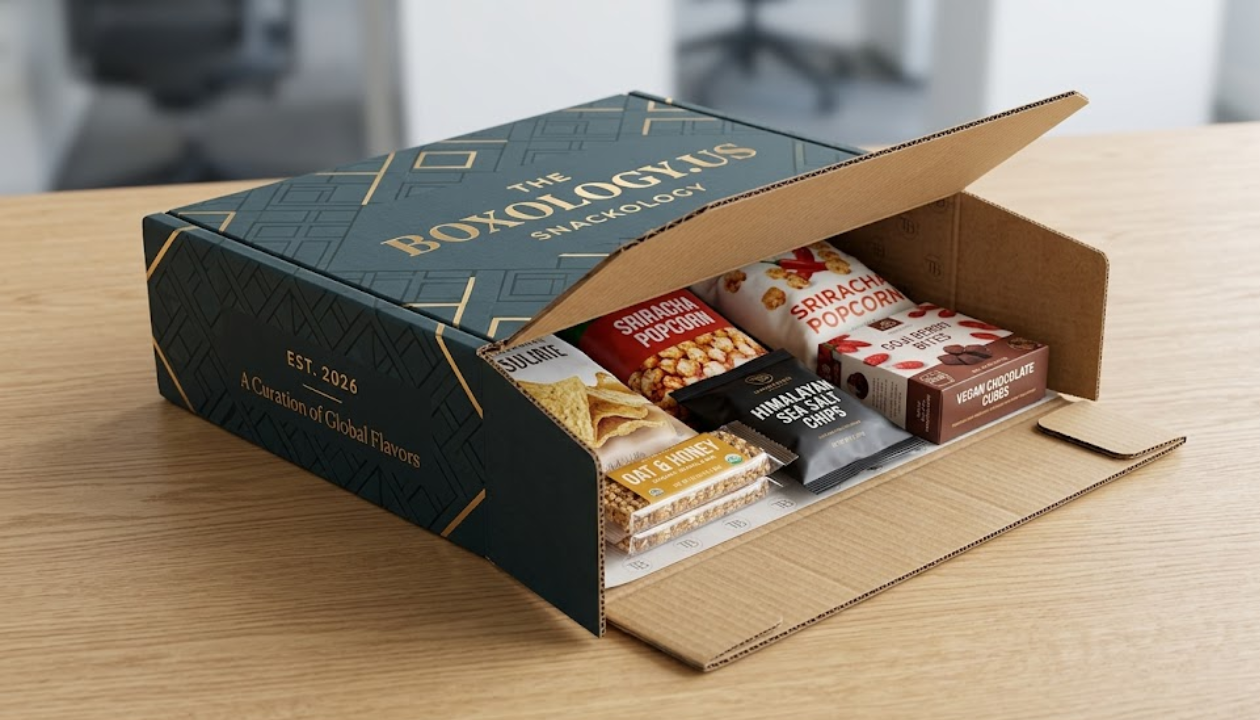
Snack packaging has to do more than hold the product. It needs to protect the snack, maintain its presentation, support efficient handling, and give the brand enough space to communicate what makes the product worth buying.
The right snack packaging depends heavily on the type of snack being packed. Cookies, granola bars, nuts, candy, chips, and individually wrapped snacks do not all require the same box construction.
For packaging buyers, the most important decisions usually come down to material, box dimensions, product protection, moisture and grease resistance, printing, and shipping requirements.
Quick Answer: What Is the Best Packaging for Snacks?
The best packaging for snacks depends on the product’s weight, shape, moisture sensitivity, grease content, serving quantity, and distribution method.
For many snack brands, a practical packaging specification should provide:
- Appropriate board strength
- Food-appropriate material selection
- Enough internal clearance
- Resistance to expected grease or moisture exposure
- Secure product positioning
- Sufficient printing area for branding
- Efficient storage and shipping dimensions
A lightweight dry snack may need a simple paperboard package, while heavier or fragile products may require a more structurally rigid construction.
There is no universal snack box size or material. The correct specification starts with the actual product.
Choosing the Right Material for Snack Packaging
Material selection should begin with the snack itself.
A dry, lightweight product has different packaging requirements from a greasy, moist, or fragile snack.
Paperboard is commonly used for retail-style snack packaging because it offers a clean printable surface and can be converted into different folding structures.
Corrugated board can be more appropriate when additional structural protection is required, particularly for shipping, multipacks, or heavier products.
For Lightweight Snacks
Paperboard can work well for products such as:
- Candy
- Individually wrapped snacks
- Small cookies
- Tea snacks
- Lightweight confectionery
The final material grade should still be selected according to the product weight and expected handling conditions.
For Heavier Snack Products
When the package carries more weight, structural stiffness becomes more important.
A stronger board construction can help reduce panel deformation and maintain box geometry during handling.
This becomes particularly relevant when multiple snack units are packed into one outer box.
How Snack Type Affects Box Construction
The snack itself should determine much of the packaging structure.
Cookies and Biscuits
Cookies can be fragile and may break when exposed to compression or impact.
The packaging should therefore provide enough rigidity and internal control to prevent excessive movement.
If the cookies are individually wrapped, the outer box primarily needs to maintain product organization and presentation.
Granola and Protein Bars
Bars usually have predictable dimensions, making them easier to package efficiently.
The main considerations are product count, orientation, fit, and the amount of empty space inside the package.
A box that is unnecessarily deep or wide increases material and shipping volume without providing meaningful protection.
Nuts and Dry Snacks
Nuts are generally compact but can be relatively dense.
For multipacks or larger quantities, packaging buyers should pay attention to the load placed on the bottom panels and sidewalls.
Candy and Confectionery
Candy packaging often places greater emphasis on visual presentation.
Bright graphics, clean print registration, coating choices, and shelf visibility can become as important as structural requirements.
Snack Box Size & Internal Dimensions
The correct snack box size should be determined from the actual product dimensions and quantity.
Start by measuring:
- Product length
- Product width
- Product height
- Number of units
- Wrapping or pouch dimensions
- Required internal clearance
Then determine how those products will be arranged inside the box.
The objective is not to leave as much empty space as possible.
It is to create enough clearance for easy packing while preventing unnecessary product movement.
Why Internal Fit Matters
Excessive empty space can cause snacks or individual packages to shift during transportation.
Too little space creates another problem.
Products may become difficult to load, the box may bulge, or the closure may not operate correctly.
A properly engineered package balances fit, protection, packing speed, and presentation.
Grease and Moisture Considerations
Some snacks create packaging challenges because of their composition.
Products containing oils, fats, sauces, or moisture can affect the performance and appearance of packaging materials.
For these products, packaging buyers should evaluate whether the selected material and any coating or barrier system are appropriate for the intended application.
This is especially important when the snack is in direct contact with the packaging material.
Grease-Prone Products
Examples include:
- Fried snacks
- Oily nuts
- Certain cookies
- Chocolate products
- Savory snack mixes
The packaging specification should account for the expected exposure rather than assuming that all paper-based materials will perform identically.
Moisture-Sensitive Snacks
Moisture can affect both the snack and the packaging.
A package may need additional barrier protection depending on the product formulation, storage environment, and expected shelf life.
For food-contact applications, the packaging specification should also be reviewed against the applicable food-packaging requirements for the intended market and product.
Custom Printing & Branding for Snack Packaging
Snack packaging is often one of the first brand touchpoints a customer sees.
That makes the printed surface commercially important.
A good design should communicate the product quickly without overcrowding the package.
Important elements can include:
- Brand name
- Product name
- Flavor
- Product imagery
- Key product information
- Net quantity
- Required regulatory information
- Barcode
- Contact or website information
Keep the Design Functional
More graphics do not automatically create better packaging.
Important information should remain readable at normal shelf distance.
Print registration also matters when multiple colors, fine lines, or small typography are used.
For premium snack brands, the combination of board surface, ink coverage, coating, and finishing can significantly affect the perceived quality of the finished package.
Retail vs Ecommerce Snack Packaging
Retail and ecommerce packaging have different priorities.
Retail Snack Packaging
Retail packaging needs to compete visually.
Shelf visibility, brand recognition, product information, and print quality become major considerations.
The package also needs enough structural integrity to maintain its appearance during store handling.
Ecommerce Snack Packaging
Ecommerce adds another challenge: transportation.
The package may pass through fulfillment centers, parcel networks, sorting equipment, trucks, and multiple handling points before reaching the customer.
In my experience, packaging buyers sometimes focus heavily on the printed appearance while underestimating the effect of shipping vibration and compression.
For ecommerce, the packaging should be evaluated as part of the complete shipping system, not just as a retail display.
Shipping Considerations for Snack Packaging
Shipping efficiency starts with dimensions.
A package that is larger than necessary takes up more space in cartons, storage locations, and transportation vehicles.
For snack brands shipping large order volumes, these small dimensional differences can become significant.
Consider:
- Finished package dimensions
- Case-pack quantity
- Pallet configuration
- Product weight
- Stacking height
- Void space
- Distribution environment
A good packaging specification should balance product protection with efficient logistics.
The Boxology’s Expert Insight
Do not finalize snack packaging dimensions before testing the actual product configuration.
A snack may have one dimension when measured individually and another packaging requirement once it is wrapped, bundled, or packed in multiple units.
In high-volume production, I recommend testing the complete configuration before approving the final dieline.
Check the product fit, closure, internal clearance, packing speed, and finished appearance.
A few minutes spent testing the structure can prevent thousands of incorrectly sized boxes from entering production.
Snack Packaging Comparison
| Packaging Type | Setup Complexity | Structural Strength | Cost-Effectiveness |
| Folding Paperboard | Low–Medium | Moderate | High |
| Printed Paperboard Box | Medium | Moderate | High for retail |
| Corrugated Box | Medium | High | Strong for shipping |
| Heavy-Duty Corrugated | High | Very High | Best for demanding distribution |
| Custom Insert Box | High | High | Best for specialized presentation |
The most cost-effective option depends on the product and distribution model.
A heavy-duty construction may be unnecessary for lightweight retail snacks, while lightweight packaging may create problems when used for heavy multipacks.
Common Snack Packaging Mistakes
Choosing Packaging by Appearance Alone
A visually attractive package still needs to protect the product.
Material selection should consider the actual handling and storage environment.
Using Excessive Internal Space
Oversized packaging increases material consumption and can allow products to move during transportation.
Ignoring Product Density
A compact but heavy snack can place significant loads on the box bottom and sidewalls.
Forgetting Shipping Conditions
Retail handling and ecommerce transportation are not the same.
Packaging should be evaluated according to where the product will actually travel.
Skipping Physical Samples
A physical sample allows the packaging team to identify fit, closure, loading, and structural problems before a production run.
Final Takeaway
The right snack packaging is a balance between product protection, material performance, dimensions, branding, and logistics.
Lightweight snacks may require a relatively simple structure. Dense or fragile products may need stronger board construction. Greasy or moisture-sensitive products require additional attention to material compatibility and barrier performance.
The best process is straightforward:
Measure the product → define the packaging format → select the material → determine dimensions → develop the artwork → test the physical sample → approve production.
For snack brands that need help selecting the right structure, The Boxology.US can review the product dimensions and packaging requirements before production.