 Skip to content

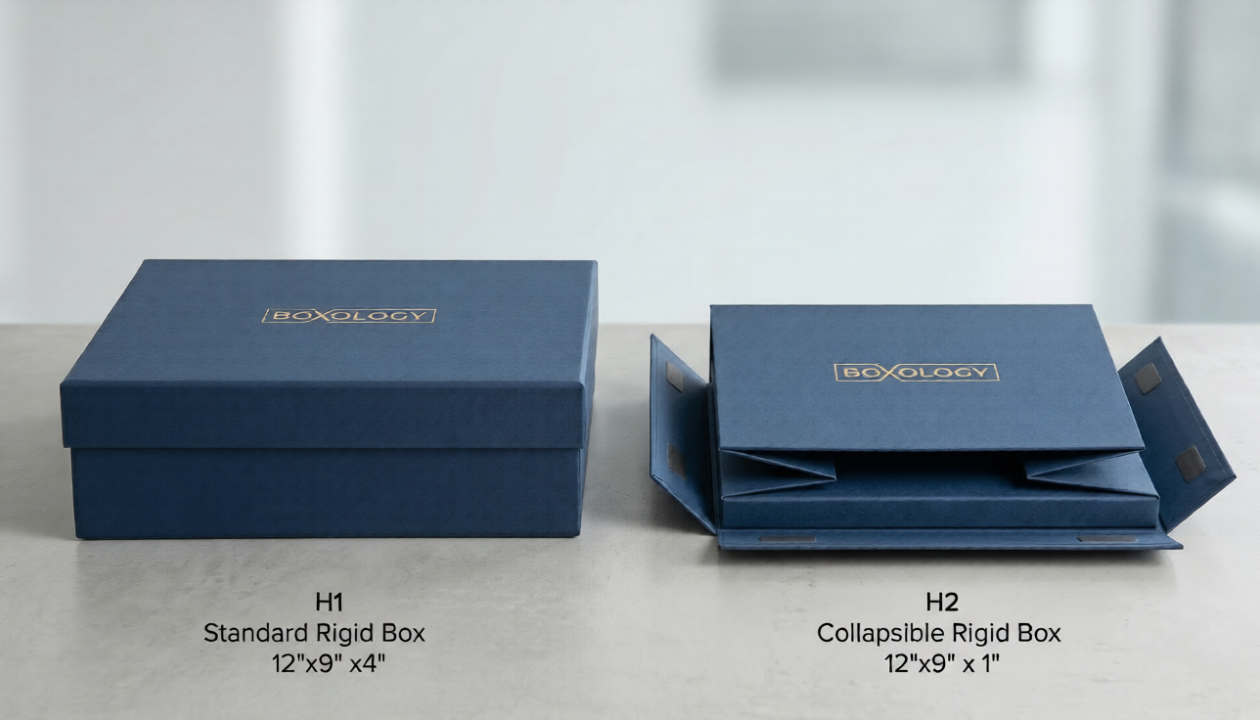







In my ten years of managing supply chains and packaging logistics, I have seen dozens of brands fall in love with the classic rigid box. There is no denying its impact. The solid construction, the heavy chipboard feel, and that signature friction-fit unboxing experience are unmatched for high-end retail.
However, what most businesses overlook is the hidden financial strain that follows. Standard rigid setup boxes arrive fully assembled. Because they cannot be flattened, brands pay to ship and store empty air. For a small e-commerce business or a growing retailer in the USA, this logistical overhead can quickly erase profit margins.
This operational bottleneck has led many companies to consider collapsible rigid boxes. But does switching to foldable options actually save your business money, or are the manufacturing costs too restrictive?
Let us break down the actual expenses across production, freight, warehousing, and assembly to determine which packaging structure makes sense for your bottom line.
1. Production and Manufacturing Costs
To understand the economics of high-end packaging, we have to evaluate the fabrication process. Both styles rely on heavy, durable materials, but their engineering pathways are completely different.

Standard Rigid Setup Boxes: Lower Initial Setup
The manufacturing process for a standard custom rigid boxes order is straightforward. A heavy chipboard base is scored, glued, and wrapped with printed art paper. Because the box remains permanently fixed in its three-dimensional form, the tooling is standard. For brands sourcing custom printed rigid boxes in smaller initial quantities, the per-unit price at the factory floor is often highly competitive.
Collapsible Rigid Boxes: Precision Engineering
A collapsible rigid box uses the same dense chipboard base, but it introduces extra fabrication steps:
- V-Groove Scoring: The chipboard must be cut with precise grooves so it can fold flat without creasing the outer art paper.
- Integrated Hardware: To ensure the panels snap into place securely during fulfillment, manufacturers embed high-strength magnets or apply industrial double-sided tape directly onto the corners.
Because of this additional complexity, the direct per-unit price for a rigid collapsible box is generally higher. In my experience working with bulk manufacturers, you can expect the upfront manufacturing cost of a collapsible rigid box to be about 10% to 15% higher than its standard, non-folding equivalent.
2. Inbound Freight and Shipping: Where the Math Shifts
This is where the direct manufacturing savings of standard packaging are often completely wiped out. Freight costs are dictated by volume, and standard setup boxes are spatial liabilities.
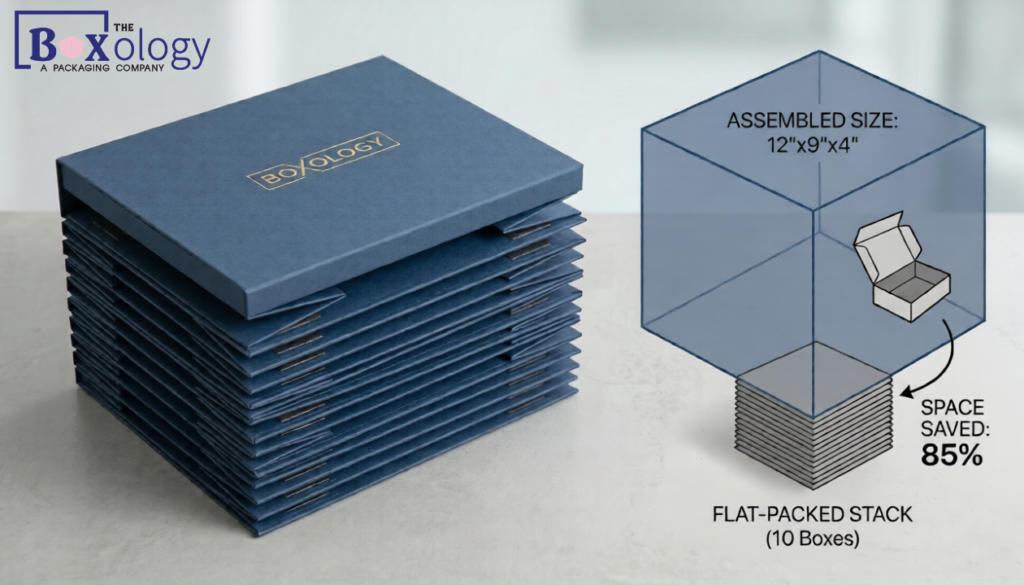
Consider a typical scenario where a retailer orders 3,000 units of a medium-sized gift box (such as 12″ x 9″ x 4″) to house their premium product line.
The Volume Penalty of Standard Boxes
If you choose standard custom rigid boxes, all 3,000 units are shipped fully assembled. This volume easily fills a massive portion of a dry van or a standard shipping container. Your freight bill reflects the physical space the boxes occupy on the truck, rather than their actual weight.
The Efficiency of Flat-Pack Alternatives
In contrast, a foldable rigid box stores completely flat. The height of that same 4-inch box drops down to a mere fraction of an inch when collapsed.
               FREIGHT PALLET FOOTPRINT (3,000 Boxes)

Standard Rigid Boxes   [████████████████████████████████] 10 Pallets
Foldable Rigid Boxes   [████] 2 Pallets
As high-end fold up boxes, they sit tightly packed on just a couple of pallets. Instead of booking a massive freight shipment, you pay for a fraction of that space. For brands shipping nationwide across the USA, reducing your pallet count from ten down to two translates directly into thousands of dollars saved on inbound shipping.
3. Warehousing and Storage: The True Cost of Square Footage
For small business owners and regional retailers, warehouse real estate is expensive. Whether you manage your own facility or use a third-party logistics provider (3PL), you are billed for every pallet position your inventory takes up each month.
+-----------------------------------+--------------------------+--------------------------+
| Storage Metric (3,000 Units)      | Standard Rigid Box       | Collapsible Rigid Box    |
+-----------------------------------+--------------------------+--------------------------+
| Average Pallets Required          | 10 Pallets               | 2 Pallets                |
+-----------------------------------+--------------------------+--------------------------+
| Monthly Storage Fee (@$18/pallet) | $180 / month             | $36 / month              |
+-----------------------------------+--------------------------+--------------------------+
| 6-Month Storage Expense           | $1,080                   | $216                     |
+-----------------------------------+--------------------------+--------------------------+
As the data shows, collapsible cardboard boxes free up valuable space. If your product moves steadily throughout the year, keeping standard rigid inventory on hand creates a continuous drain on your operating cash flow. Choosing a custom collapsible box allows you to store four to five times more packaging in the exact same footprint.
4. Assembly and Fulfillment: The Time Factor

While flat-pack packaging wins the freight and storage battle, it does introduce a new variable into your operations: manual assembly time.
Standard boxes require zero preparation. Your pick-and-pack team pulls the lid off, places the item inside, and places the box directly into its folding shipping boxes mailer.
A folding rigid box, however, requires a few manual steps:
- Lay the flat box on a clean surface.
- Peel the protective liners off the four adhesive corner tabs (or align the built-in magnets).
- Pull the side walls upright and press the corners together for a few seconds to set the bond.
While this assembly process only takes about 15 to 20 seconds per unit, that time does add up over thousands of orders. If your business handles high-velocity fulfillment with limited staff, this minor extra step is something you need to factor into your total cost analysis.
5. The True Cost of Ownership: Financial Comparison
To give you a clear picture of how these variables interact, let us review a direct comparison for a retail run of 3,000 premium boxes.
+----------------------------------+--------------------------+--------------------------+
| Total Project Cost Category      | Standard Rigid Boxes     | Collapsible Rigid Boxes  |
+----------------------------------+--------------------------+--------------------------+
| Production Cost ($4.10 vs $4.60) | $12,300                  | $13,800                  |
+----------------------------------+--------------------------+--------------------------+
| Freight & Local Trucking         | $3,600                   | $950                     |
+----------------------------------+--------------------------+--------------------------+
| 6-Month Storage Cost             | $1,080                   | $216                     |
+----------------------------------+--------------------------+--------------------------+
| Added Assembly Labor             | $0                       | $350                     |
+----------------------------------+--------------------------+--------------------------+
| Total Cost of Ownership          | $16,980                  | $15,316                  |
+----------------------------------+--------------------------+--------------------------+
| Real Cost Per Box                | $5.66                    | $5.10                    |
+----------------------------------+--------------------------+--------------------------+
Even though the custom collapsible box has a higher initial production cost, the massive savings in freight and storage space make it the more cost-effective choice for this business.
The Boxology’s Expert Insight
The Professional’s Tip on Adhesive vs. Magnetic Corners
If you decide to source custom collapsible boxes, do not ignore how the corners assemble. Manufacturers offer two primary options: double-sided adhesive tape or built-in magnets.
Here is what most businesses overlook: If you purchase thousands of boxes with adhesive tape corners and store them in a non-climate-controlled warehouse through a hot summer, the glue on the tape can dry out. When your team pulls them out months later to assemble them, the corners may fail to stay stuck.
My advice: If your packaging sits in storage for more than three months, pay the small premium for magnetic collapsible corners. They assemble faster, do not degrade with heat, and give your customer a more reliable unboxing experience.
Decision Checklist: Which Packaging Style Is Right for You?
Choose a Standard Rigid Box if:
- You are placing a small, local order where freight costs are low.
- Your fulfillment center needs to pack items as quickly as possible without extra assembly steps.
- Your products are extremely heavy and require a solid, pre-glued base for secure transit.
Choose a Collapsible Rigid Box if:
- You source your packaging in bulk and need to optimize your freight costs.
- Your physical storage space is limited and you cannot afford to store empty boxes.
- You want a practical, premium presentation that stores easily but transforms into a high-end gift box in seconds.
Making the Best Choice for Your Brand

Many of our clients at The Boxology.US find that the right packaging style depends entirely on their current operational setup. While standard setup boxes remain a staple for hyper-luxury retail items, custom printed rigid boxes with collapsible frames offer the perfect balance of visual appeal and logistical efficiency for modern e-commerce.
By calculating your total cost of ownership including freight, warehouse space, and assembly time you can choose the packaging that keeps your operations running efficiently.
Are you ready to optimize your packaging strategy? Contact our team at The Boxology.US today for a free design consultation. We will help you analyze your shipping requirements, review your storage limits, and create a custom solution that elevates your brand while lowering your total expenses.


